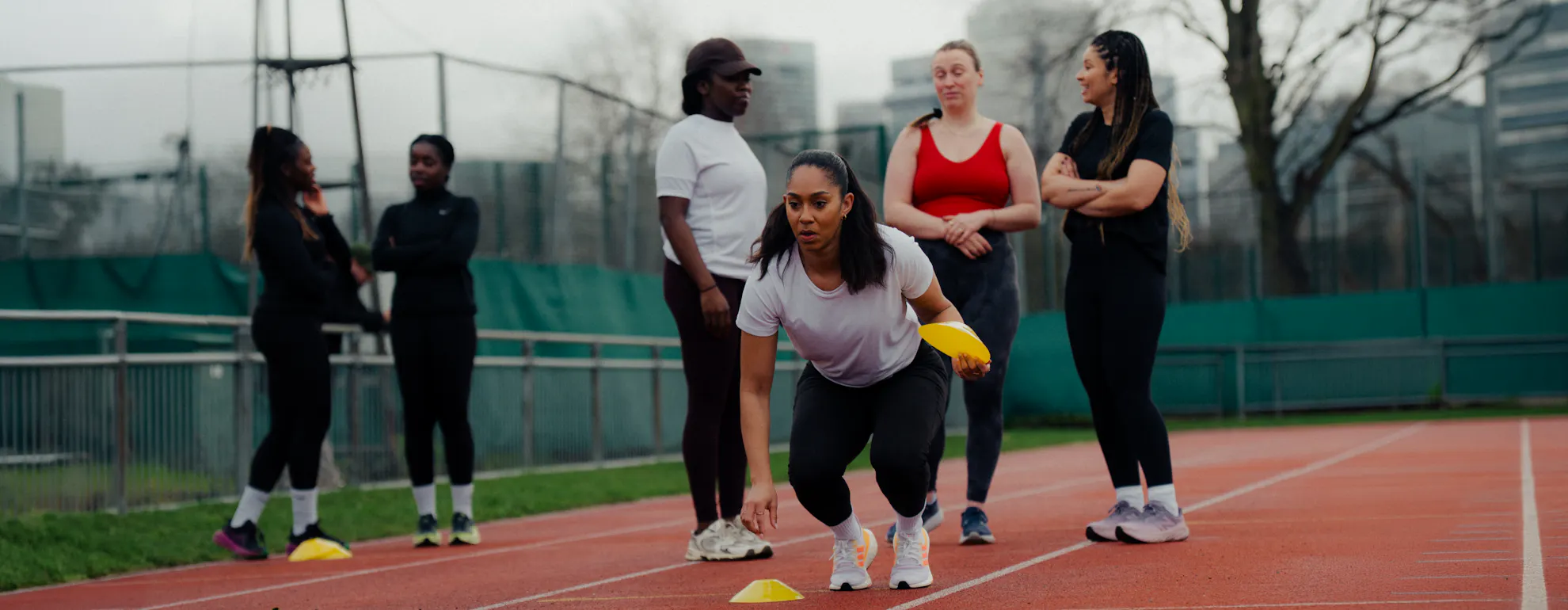
Sprint Training for Every Runner: Improve Your Running Mechanics
Sprint drills aren't just for track athletes. We spoke with sprint coach and former 400m hurdler Kerry Dixon to understand how runners can benefit from sprint training and technique. Learning the fundamentals of sprint mechanics can help runners of all abilities develop better coordination, rhythm, posture and force production, helping you run more efficiently when it matters.
To explain the benefits of sprint training and mechanics, Kerry has written this article for the SportsShoes Advice Hub.
Meet Kerry Dixon: From Elite Hurdler to Sprint Coach
I started athletics as a 14-year-old high jumper before transitioning into the 400m hurdles. For 15 years, I trained and competed across Europe and North America, with the goal of making the British team and becoming an Olympian.
I trained alongside Olympians and top-level athletes and gave everything to my dream. I never quite made the team, but what I gained was the coaching cues, mechanics and fundamentals that shaped everything about how I move and think when it comes to running.
I later trained as a Level 3 PT and athletics coach and started my journey teaching other runners the fundamentals of running to help them improve and enjoy the sport.
Common Misconceptions Among Distance Runners
Some of the common misconceptions seen among distance runners are the myths that:
“Sprint drills are only for sprinters.”
Drills are for all runners as they teach the body to move more efficiently with better mechanics and technique. This means less wasted energy, allowing runners to hold pace and speed over longer distances and under fatigue.
“Running more miles is the only way to improve.”
If your movement isn't efficient, simply adding more miles can reinforce poor habits. Dedicating a small amount of time consistently each week to drills and faster running can help you develop better movement patterns and make your running feel stronger and more controlled.
“Sprinting is only for young or elite athletes.”
You don't need a track background to benefit from sprint mechanics or to be the best in the world. Learning the fundamentals of sprint mechanics is about improving how you move rather than trying to become a sprinter.
Whether you're running a 5K or a marathon, the goal is still to move efficiently at your race pace and maintain that efficiency as fatigue builds.
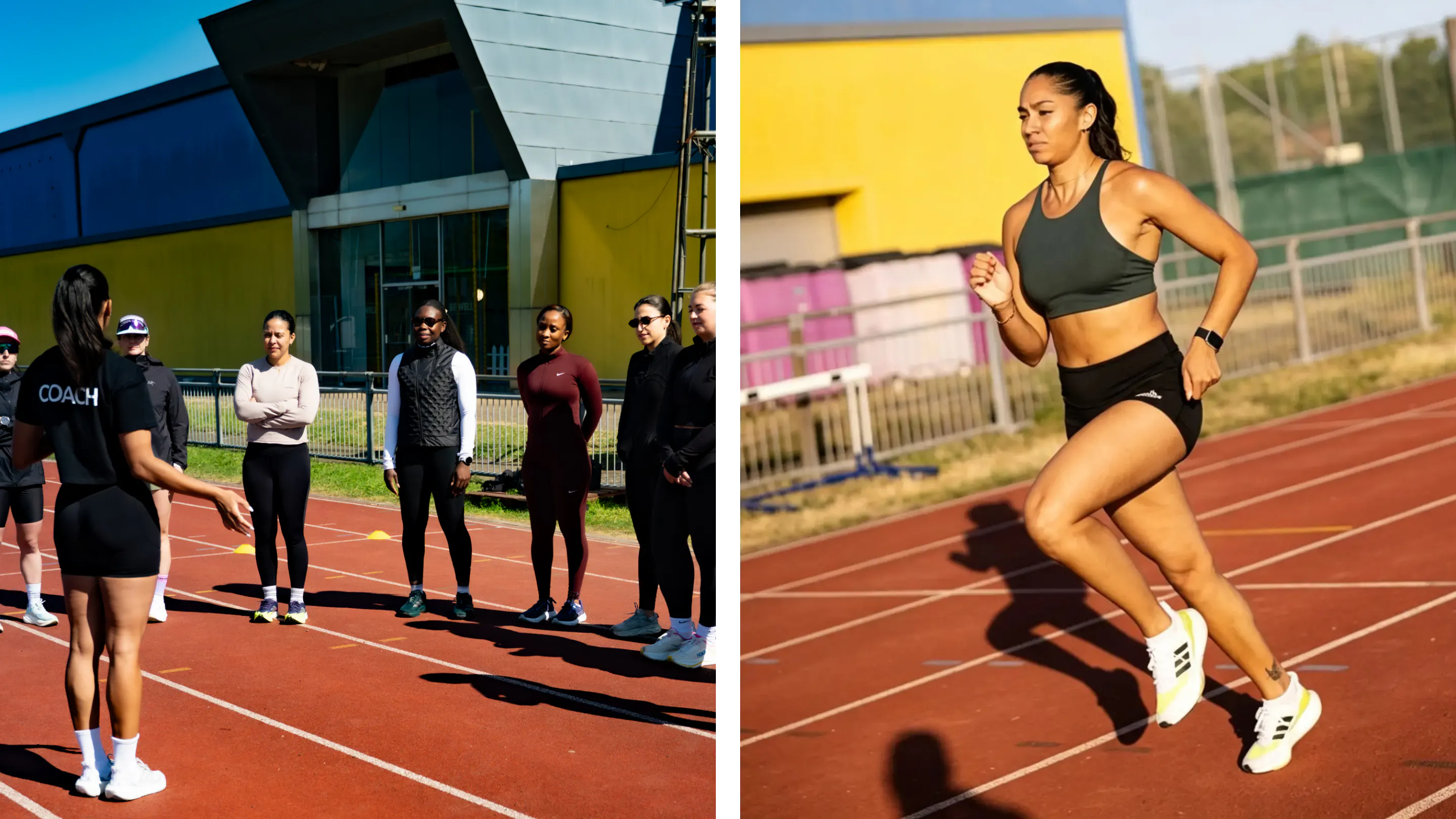
Why Sprint Mechanics Matter For Every Runner
Many runners associate sprinting with explosive track athletes, but sprint mechanics can also teach distance runners to coordinate their movement more efficiently, improving the quality and rhythm of their stride.
The drills and exercises can then be adapted to your experience, training phase and chosen distance.
Sprinting teaches you to develop your running technique and, when this is translated into your running, it allows you to run faster and further and maintain this until the finish line.
Improved running economy
The key to running any distance is to minimise fatigue and move efficiently.
The goal is to use less energy at the same pace, allowing you to run further or faster without working harder.
Practising efficient movement can help you develop the coordination and control needed to maintain your running form as fatigue sets in.
Greater lower-body power and force production
Sprint drills help develop the muscles responsible for producing force into the ground. More force means a stronger push-off with every stride, which can translate into a stronger rhythm and cadence.
As a by-product, fitness levels can also increase from working at a slightly higher intensity for a short burst or period of time.
Better coordination and rhythm
Sprint drills help develop the relationship between the arms, legs and torso, making movement more fluid and natural.
Repetition is key to building this skill and developing muscle memory.
Posture and body awareness
Running is a feeling and works better when you're relaxed.
Breaking down the construct of sprinting teaches you to become in tune with your body and how it moves. Simple cues help runners develop posture awareness.
Supporting stronger, more resilient movement
Sprint training can form part of a wider strength and conditioning programme, incorporating drills, bodyweight exercises, weightlifting and plyometrics.
These activities can help runners become stronger and better able to handle the forces involved in running. Drills also teach runners how to distribute impact and load through the body and respond to different running demands.
There is no method that can completely prevent injury, but developing strength, coordination and efficient movement can form an important part of a well-rounded training programme.
Before You Sprint: The Importance of a Proper Warm-Up
The warm-up is just as important as the running reps themselves. It gradually raises your heart rate, prepares your muscles and joints, and gives your nervous system time to adjust to moving at pace.
Beyond physical preparation, it's an opportunity to deconstruct the running movement—slowing it down to practice key positions, feel your technique, and then gradually build the speed back up.
Think of your warm-up as a crucial part of the main session, not something to rush through. The better you prepare your body, the better you'll move when it matters.
Glute Band Activation Exercises
Activated glutes are an essential part of a good warm-up. Glutes are one of the most powerful muscle groups involved in running but are often underactive, especially if you've spent most of the day sitting at a desk.
Using resistance bands helps activate the glutes before running, encouraging better hip stability, improved force production and greater control through each stride.
When the glutes are working efficiently, other muscles are less likely to overcompensate.
Dynamic and Hurdle Mobility
Dynamic mobility prepares your body to move through the ranges of motion you'll actually use when running.
I also like incorporating hurdle mobility to improve movement around the hips while encouraging balance, coordination and control.
Having good hip mobility helps the body to ease into a better stride and cadence for longer runs too.
Sprinting requires your body to move quickly through a full range of motion, so it's important to prepare your joints and muscles before asking them to work at higher speeds.
Sprint Drills
Sprint drills are where we begin to reinforce good movement patterns before we start running fast.
Rather than jumping straight into sprinting, drills allow you to slow everything down and focus on posture, coordination, rhythm and foot placement.
We often start with walking variations before progressing into more dynamic versions as confidence and coordination improve.
Think of sprint drills as an opportunity to practise good technique before putting it into action.
Plyometric Drills
Plyometric exercises help prepare the body to produce and absorb force quickly.
Simple exercises such as pogos, hops or bounds help wake up the lower legs and improve the elastic qualities needed for efficient running. They also encourage shorter ground contact times and help prepare your muscles and tendons for the demands of sprinting or the repeated impact of longer-distance running.
Progressive Accelerations
The final stage of the warm-up is gradually building speed.
Rather than going straight into an all-out sprint, begin with controlled build-ups, increasing your pace with each repetition.
This gives your body time to adapt to faster movement, prepares your nervous system and helps prepare you for the demands of your main sprint session.
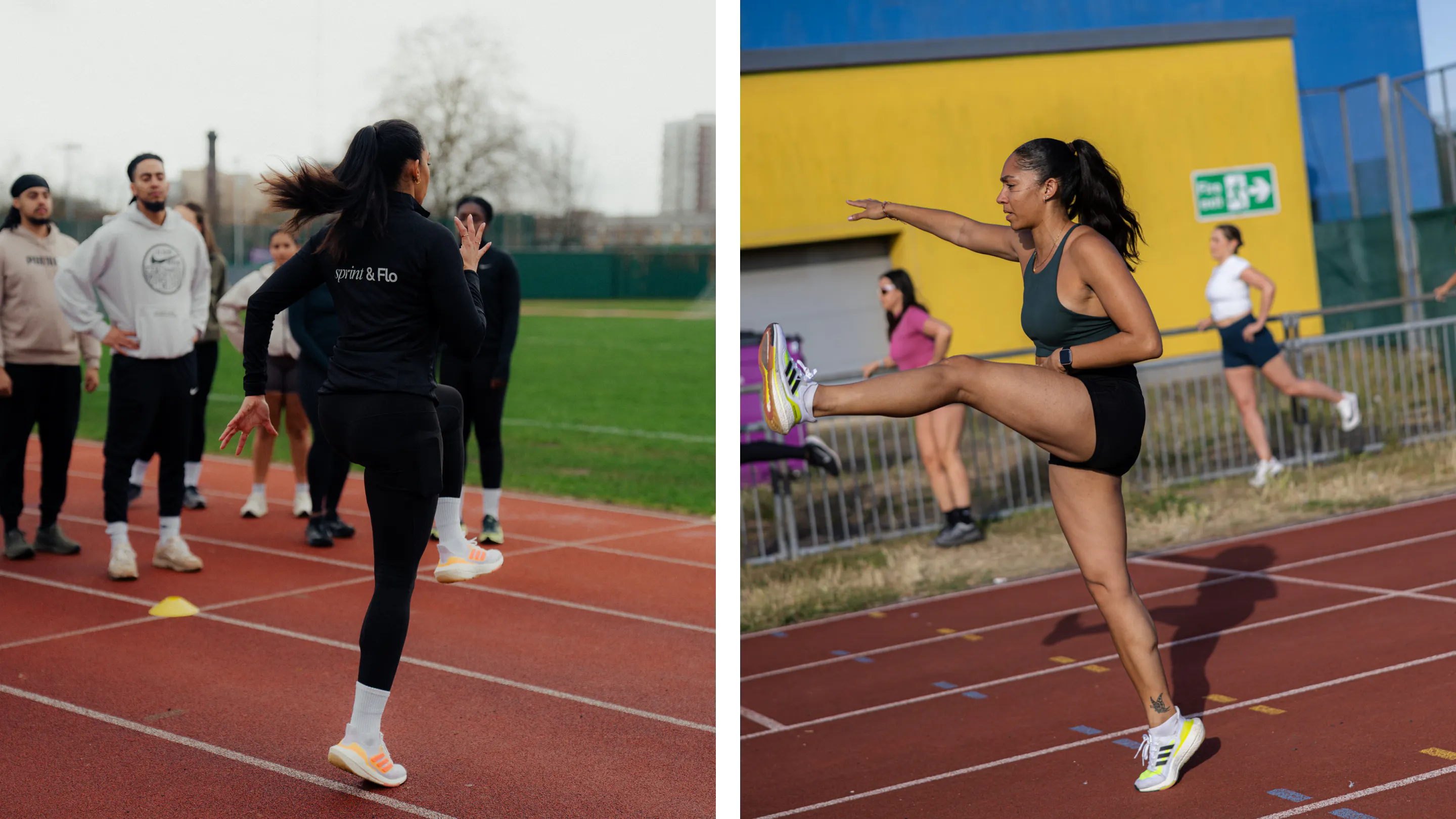
The Sprint Drills Every Runner Should Learn
Sprint drills are simply movement drills that break the sprint down into individual components, allowing you to focus on one element of your technique at a time before bringing it all back together.
Whether you're running a 100m sprint or training for your next marathon, you're still asking your body to produce efficient movement with every stride.
Think of sprint drills as a way of building muscle memory. The more consistently you practise good movement patterns, the more naturally they transfer into your running.
These are the three drills I recommend every runner learn.
High Knees
High knees are a great introduction to sprint mechanics because they encourage good posture, rhythm and coordination while encouraging knee lift and rapid cadence.
It's more than just lifting your knees as high as possible. The key is to stay tall while maintaining a quick, controlled rhythm.
Key Focus
Posture – Stay tall through your hips and avoid leaning backwards.
Knee drive – Lift the knee naturally without forcing the movement. Think about driving the knee up while pushing into the ground.
Rhythm – Think quick, controlled steps rather than rushing. Pump your arms as the quicker your arms move, the legs will lift and follow.
A-Skips
A-skips develop coordination between the arms and legs while reinforcing good posture, timing and foot placement.
Although they can feel awkward at first, they're one of the best drills for developing efficient running mechanics.
Key Focus
Timing – Let your arms and legs work together naturally, creating a natural skip.
Coordination – Stay relaxed and avoid overthinking each movement. Let your arms drive your hands into your eyeline and back down to your pockets.
Force application – Aim to place your foot back down underneath your hips rather than reaching out in front to avoid creating the habit of overstriding when you run.
Low Ankle Dribbles
Low ankle dribbles teach runners one of the most important concepts in running: quick and efficient ground contact while keeping your steps short and controlled.
Key Focus
Ground contact – Aim for light, quick contact with the floor, using a low ankle-cycling motion while keeping the movement controlled.
Foot placement – Land underneath your centre of mass to encourage correct stride form.
Posture – Stay tall and avoid sitting back through your hips. Keep your chest up and eyes forward to stay tall. Where you focus your eyeline on the horizon helps the body stay tall.
The Key Sprint Mechanics Every Runner Should Understand
Sprint mechanics might sound technical, but they're simply the building blocks of efficient running.
Whether you're sprinting, running a 5K or training for a marathon, every runner relies on the same fundamental movement patterns and how efficiently you use them.
When your posture, arm action and foot placement work together, running feels smoother, more controlled and often more efficient.
Rather than trying to change everything at once, focus on mastering these key principles one at a time during your training runs.
The goal isn't to look like a sprinter, it's to move more efficiently.
Small improvements to your mechanics can make a big difference, no matter what distance you run.
Posture
Good posture creates the foundation for efficient running.
Aim to run tall through your hips with a slight forward lean from your ankles, not from your waist.
Avoid sitting back into your stride or collapsing through your upper body, as this can make it harder to produce force and maintain good cadence, rhythm and running form.
Key Tips:
● Stay tall through your hips.
● Keep your chest open and eyes looking ahead on the horizon.
● Lean from your ankles, not your waist.
Arm Drive
Your arms play a much bigger role in running than many people realise.
A strong, relaxed arm action helps create rhythm, maintain balance and supports the movement of your legs.
If your arms become tense or swing excessively across your body, it can disrupt your running form, use up valuable energy and increase fatigue when running.
Key Tips:
● Drive your arms forwards and backwards, not across your body.
● Keep your shoulders relaxed.
● Let your arms help set your running rhythm and your legs will follow.
Knee Drive
Good knee drive is about creating enough lift to produce an efficient stride while maintaining rhythm and control.
It should feel natural rather than exaggerated.
Key Focus:
● Lift the knee with purpose, not force.
● Maintain rhythm throughout the movement.
● Let the knee drive naturally support your stride.
Foot Strike
Foot strike is one of the most misunderstood aspects of running.
There's often a lot of discussion around whether you should land on your forefoot, midfoot or heel, but the reality is that there isn't one "perfect" foot strike for every runner.
Where your foot lands is often influenced by factors such as your running speed, cadence and individual biomechanics.
Rather than trying to force yourself onto your toes or avoid your heels altogether, it's more important to think about where your foot lands in relation to your body.
Commonly, most runners outside of sprinting will land on their midfoot or heel.
If your foot reaches too far out in front of your body, it can contribute to greater braking forces at ground contact. Focus on maintaining good posture and aiming to land with your foot underneath or close to your center of mass.
In many cases, improving your posture, cadence and overall running mechanics will naturally lead to a more efficient foot strike without you having to consciously think about it.
Key Focus:
● Avoid reaching too far in front of your body.
● Don't force yourself into a particular foot-strike pattern.
● Let good posture and mechanics guide your foot strike rather than forcing a particular landing pattern.
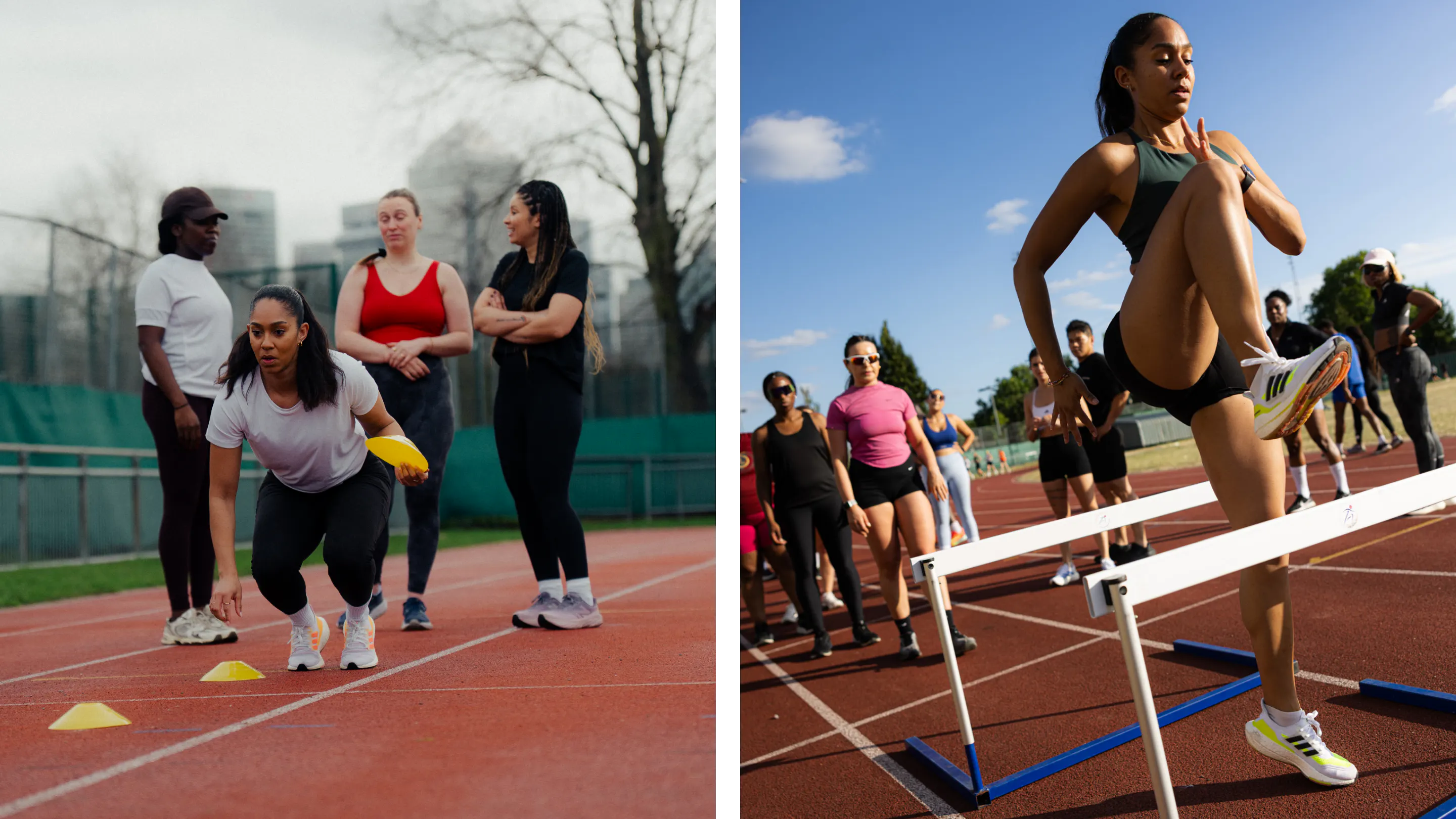
Common Speed Work Mistakes Runners Make
Even experienced distance runners can struggle when introducing speed work. It can be incredibly beneficial, but it’s also where many runners start overthinking their technique.
I often see runners trying so hard to run fast that they abandon the natural, efficient movement patterns practiced in their drills. Instead of allowing good mechanics to create speed, they reach for it.
Speed work is designed to reinforce the same strong posture, rhythm, and coordination you've already developed. As the pace increases, your technique should remain consistent.
Here are some of the most common mistakes I see and how to avoid them.
Overstriding
One of the most common mistakes I see is runners reaching too far out in front of their body with each step.
This can create a braking force every time your foot lands, making it harder to maintain momentum and increasing the amount of energy needed to run, leading to quicker fatigue.
Instead of thinking about reaching forwards, focus on applying force into the ground and allowing your stride length to happen naturally.
Key Focus:
● Land naturally closer to your centre of mass.
● Push the ground away rather than reaching forwards.
● Keep your cadence smooth and consistent.
Looking Down & Losing Your Posture
Where your head goes, your body often follows.
Looking down at your feet can cause you to collapse through your chest and hips, making it more difficult to maintain efficient running mechanics.
Instead, keep your eyes looking ahead on the horizon and it will allow your posture to stay tall and relaxed.
Key Focus:
● Eyes looking ahead.
● Stay tall through your hips.
● Lean from your ankles, not your waist.
Forgetting That Your Arms and Legs Work Together
One thing I see all the time is runners treating their arms and legs as two separate movements.
In reality, your arms help create rhythm, balance and timing. If your arms stop working efficiently, your legs often follow.
Whether you're practising sprint drills or running at speed, think of your whole body working as one connected system rather than focusing on one body part at a time.
A common example is allowing the arms to swing across the body rather than driving forwards and backwards, which can create unnecessary rotation and make running less efficient.
Key Focus:
● Drive the arms forwards and backwards.
● Let the arms help set your rhythm.
● Think of your body moving as one connected system.
Running With Too Much Tension
One of the biggest misconceptions is that sprinting means trying as hard as possible.
In reality, the fastest and most efficient runners are often the most relaxed.
Holding tension in your shoulders, jaw or hands wastes energy and makes it harder to move freely.
This is another key skill sprint drills teach you, which is how to generate power and stay relaxed and controlled.
Stay powerful where you need to be, but relaxed everywhere else in your body.
Key Focus:
● Relax your shoulders.
● Keep your hands and fingers soft.
● Breathe naturally to avoid unnecessary tension.
Plyometrics: Building Power and Elasticity
Plyometrics are another useful tool for developing power, coordination and the ability to produce and absorb force quickly.
At their simplest, plyometrics teach your body to absorb force when you land and then return that force efficiently as you push back off the ground.
This helps improve the spring in your stride, reduces time spent on the ground and can make your running feel more responsive.
If you're new to plyometrics, start with simple exercises before progressing to more advanced variations.
Running well goes beyond just covering more miles. Spending a small amount of time each week improving your movement, strength and coordination can make every run feel more efficient.
You don't need to do everything at once. Simply start with the basics, stay consistent and focus on moving well before moving faster.
Pogos
Pogos are one of my favourite introductory plyometric exercises because they're simple, effective and suitable for most runners.
The aim is to produce quick, reactive contacts with the ground while staying tall through your body.
Focus on:
● Staying tall through your posture.
● Spend as little time on the ground as possible.
● Let the movement come from your ankles rather than bending deeply through your knees.
Bounds
Bounding helps develop lower-body power while encouraging runners to produce force into the ground and move forwards with intent.
Start with shorter, controlled bounds before progressing to greater distance and introducing different variations.
Focus on:
● Drive forwards rather than upwards.
● Maintain rhythm and control.
● Land softly with good balance.
Single-Leg Strength & Stability
Running is essentially a series of single-leg movements, so building strength and stability on one leg is incredibly valuable.
Exercises such as single-leg squats, step-ups and single-leg Romanian deadlifts help improve balance, hip stability and control, creating a stronger foundation for running.
Focus on:
● Maintain good balance throughout the movement.
● Keep your hips stable.
● Prioritise control before adding load.
Final Thoughts
You don't need to be a sprinter to benefit from sprint mechanics.
Whether you're training for a 5K, half marathon or marathon, every runner can benefit from developing better coordination, posture, rhythm, strength and control.
The goal isn't to turn distance runners into sprinters. It's to help runners understand how their body moves, practise efficient movement patterns and ultimately make better use of every stride.
The fundamentals of sprint mechanics are ultimately about improving how you move – and that's something every runner can benefit from.
Welcome
Welcome to the SportsShoes Running Hub! We’ve teamed up with the experts to bring you the very best advice in all things running - from training, to nutrition and even motivation. Alongside tips from you, our running community, and the latest news and releases, we hope we’ll inspire you to run stronger,better and happier – because as we know, it’s no fun standing still.