
Can You Train for a Trail Race Without Hills?
Can You Train for a Trail Race in the City?
You’ve signed up for a trail race, or maybe you just want to feel stronger when the climbs kick in, but you’ve got one problem — the trails are just over 30 minutes away.
It might not sound that far, but after work or on a busy day, that drive suddenly feels a lot less appealing.
If you’re living in a city, you probably don’t have the luxury of moorland, woodland paths or hills right on your doorstep. It’s just flat pavements, traffic lights… the usual.
But that doesn’t mean you can’t actually prepare your legs for the demands of elevation gain.
With a bit of creativity, there are plenty of ways you can start building the strength and fitness you need to tackle the trails, even in a flat city. Things like stairs, bridges, or even a treadmill if you’ve got access to one.
It’s not perfect, but it works a lot better than you’d think.
Why elevation gain matters for trail running
When you’re climbing on the trails, everything has to work a bit harder. Your stride shortens without you really thinking about it, your heart rate increases much quicker, and your legs start to burn in a way that running on the flat just doesn’t quite replicate.
That’s where things like vertical gain and hill-specific strength come in. You are teaching your body how to keep moving when fatigue starts to set in.
On the trails, it’s unlikely that you’ll just climb once and be done. You’ll climb, recover slightly, climb again… and by the end your legs are still expected to keep going.
Practising to run downhill matters too. It doesn’t always feel like "training" at the time, but it loads your quads in a completely different way. That eccentric loading is what catches a lot of runners out on race day when their legs feel fine… until they don’t.
In short, it isn’t just about elevation gain. It’s about preparing for effort that keeps changing and strengthening muscles and connective tissues that wouldn’t usually be challenged on flat terrain, helping you become a stronger, more efficient trail runner.
ㅤ
ㅤ
Can you prepare for trail running without hills?
The short answer is yes.
While nothing completely replaces time spent on the trails, you can build a lot of the fitness and strength needed for trail running without having mountains or long climbs on your doorstep.
Once you start looking, the city offers more options than you might expect.
Good options are:
● Canal ramps
● Stadium approaches
● Long bridge inclines
● Steep residential roads
● Multi-storey car parks
What to do:
● Run uphill at a steady, hard effort
● Jog or walk back down
● Repeat
This builds:
● Climbing power
● VO2 fitness
● Trail-specific leg fatigue tolerance
Don't get too caught up chasing the steepest hill you can find. Consistent climbing volume is usually more valuable than one brutally steep effort. The trick can be stacking shorter climbs efficiently.
ㅤ
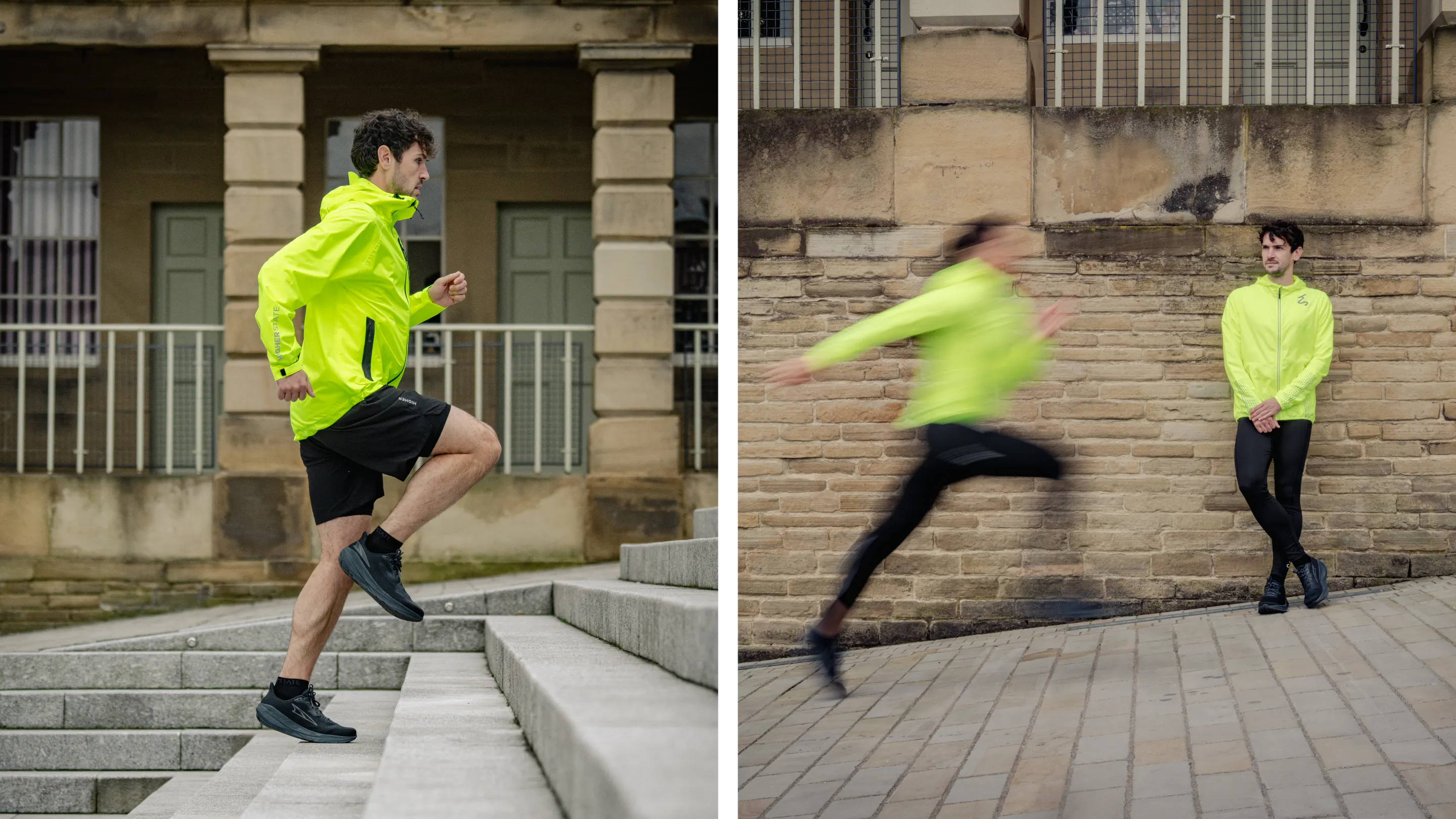
Stairs: one of the simplest ways to build climbing strength for the trails
Stairs are one of the most obvious urban structures you can use to benefit your training, and you can find them almost everywhere.
You may be lucky enough to have a long run of stairs in your city, but local stadiums, train stations, bridges and blocks of flats with outdoor stairways can all be good options.
As with hill repeats, this doesn't need to be complicated. Run up at a steady effort, walk back down and repeat.
At first it feels almost too simple, but after a few reps you will really begin to feel it in your calves and quads.
To keep the effort more trail-specific, don’t sprint them. Keep it controlled. Think steady effort rather than racing to the top as quickly as possible.
For trail races with steep inclines, power hiking matters just as much as running.
Session ideas:
● 10–20 × 1–2 minute climbs
● 6–10 longer efforts of 2–3 minutes
Focus on:
● Running or power hiking uphill
● Walking down for recovery
● Maintaining a consistent effort
Why it's useful:
● Very specific for steep trail climbs
● Builds leg power and hiking strength
● Helps develop the rhythm you'll often use during longer trail race ascents
ㅤ
Other ways to find elevation in the city
While you may not have access to a long set of stairs or a treadmill, there are still lots of other ways to get creative with incline training in your town or city.
Bridge repeats offer a great combination of gradual incline and continuous effort, while multi-storey car parks can provide a mix of uphill and downhill training in one location.
Keep an eye out for:
● Canal and lock ramps
● Long bridge inclines
● Steep residential roads
● Stadium approaches
● Pedestrian overpasses
Some runners even build routes that link several smaller climbs together. Individually they might not seem like much, but over the course of an hour they can add up to a surprisingly good amount of elevation gain.
Multi-storey car parks
Although not the most glamorous training option, multi-storey car parks are packed with features that can help prepare you for both uphill and downhill running.
They have ramps, levels and stairs all contained in one place, making it easy to plan a structured session.
A good multi-storey car park gives you:
● Continuous elevation gain using stairs or ramps
● Repeatable loops that are perfect for interval training
● Controlled descent training
As with any training, it is important to remain aware of vehicles, pedestrians and any local restrictions.
Treadmill incline training
Treadmill training may not be the most exciting option, but if you have access to one, it can be incredibly effective.
Treadmill incline work is probably the easiest way to control everything. Set the incline, set your pace and hold it. No interruptions, no route planning, just steady climbing.
Unlike stairs or short hill repeats, the treadmill allows you to maintain a continuous effort for much longer periods, making it particularly useful for building climbing endurance.
Suggested session:
This is a great all-round session for building climbing legs, fatigue resistance and aerobic durability.
● 45–90 minutes
● 10–15% incline
● Brisk hiking pace
Focus on:
● Breathing steadily
● Keeping a consistent pace
● Staying in a lower heart rate zone (Zone 2–3)
This is particularly useful for runners preparing for long trail races and ultras, where sustained climbing often matters more than short bursts of speed.
| Incline | Best use |
| 3-6% | steady aerobic running |
| 7–10% | Hill endurance |
| 10-15% | Trail climbing simulation |
| 15%+ | Steep hiking / ultra prep |
Treadmill work is also a great way to add structure to your training plan, and an even better option for those darker wet days.
How to prepare your legs for downhill trail running in a flat city
Downhill running is often overlooked. Training for the climbs gets all the attention, but if your legs aren't prepared, the descents can be what break you.
You might arrive at your next trail race with great uphill fitness, but still be unprepared for the damage that downhill running can cause.
This is because your quads absorb a huge amount of impact when running downhill.
In your downhill training, you're really trying to build three things:
● Eccentric quad strength (braking force)
● Stability and coordination
● Confidence descending while fatigued
Focus on:
● Quick feet
● A relaxed upper body
● A slight forward lean
● Avoiding heavy braking with every stride
Stairs can help here too, not just going up, but coming down slowly and under control.
You can also train your legs to absorb impact by adding some single-leg strength work at home or in the gym.
Exercises such as step-downs, split squats and single-leg deadlifts can all help improve control and resilience when descending on technical trails.
If you have access to a treadmill with a decline function, this can be another useful way to expose your legs to downhill-specific loading before race day.
You might not have hills on your doorstep, but you can still arrive at a trail race with strong climbing legs if you're consistent with stairs, ramps, bridges and treadmill work.
Welcome
Welcome to the SportsShoes Running Hub! We’ve teamed up with the experts to bring you the very best advice in all things running - from training, to nutrition and even motivation. Alongside tips from you, our running community, and the latest news and releases, we hope we’ll inspire you to run stronger,better and happier – because as we know, it’s no fun standing still.