At Home with La Sportiva: Where Mountains Shape More Than Just Shoes
Written by Ben Mounsey.
The drive into Ziano di Fiemme quietly changes your expectations.
As the road winds deeper into Italy's Val di Fiemme, the Dolomites begin to dominate every view. Towering limestone peaks rise above dense forests, crystal-clear rivers carve through the valley floor and every village seems intrinsically connected to the landscape around it. It doesn't take long to understand that people here don't simply visit the mountains - they live with them. They work in them, they play in them and, in the case of La Sportiva, they've spent almost a century building a company around them.
For many UK trail runners, La Sportiva is recognised as one of the world's leading mountain brands. In Italy, however, it feels like something altogether different. Here, it's woven into the fabric of mountain life - a company whose story is inseparable from the people, the landscape and the community that have shaped it for generations.
That connection is apparent from the moment I arrive at the company's headquarters.
Whatever expectations I had of visiting one of the outdoor industry's most respected brands disappear almost as soon as I walk through the door.
There are no corporate formalities, no polished presentations and no carefully rehearsed introductions.
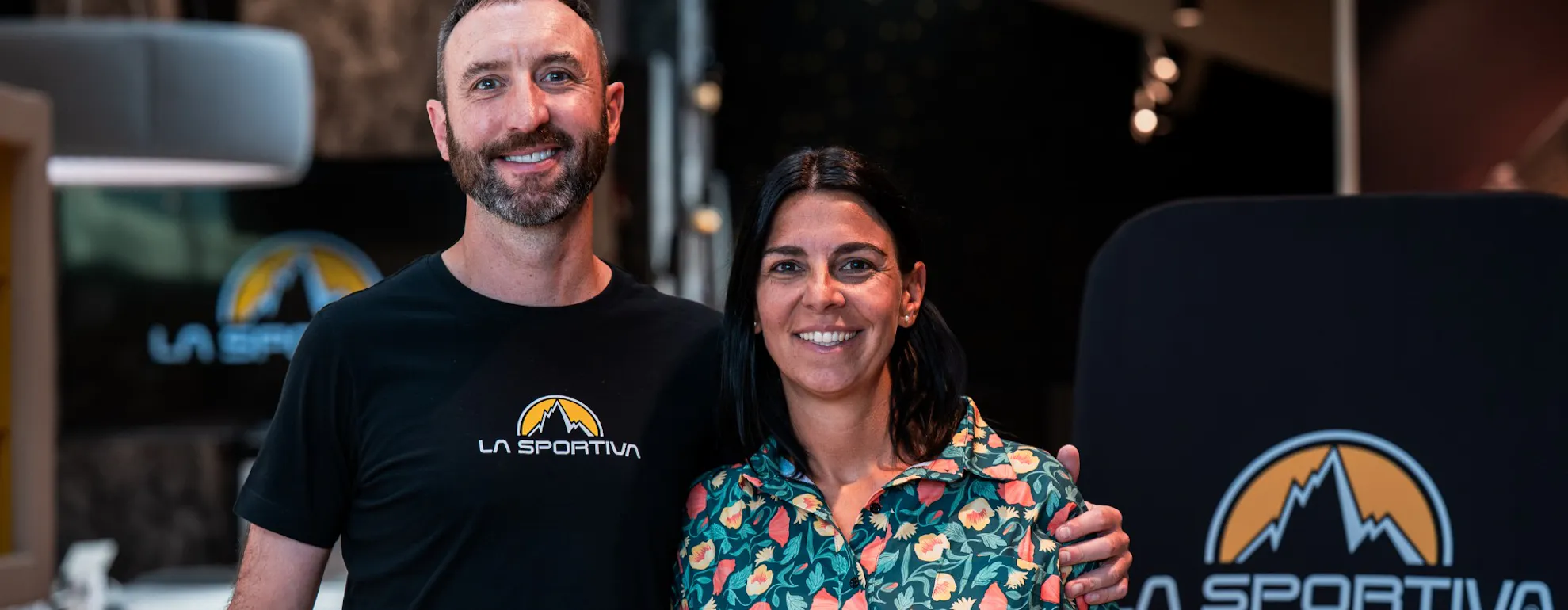
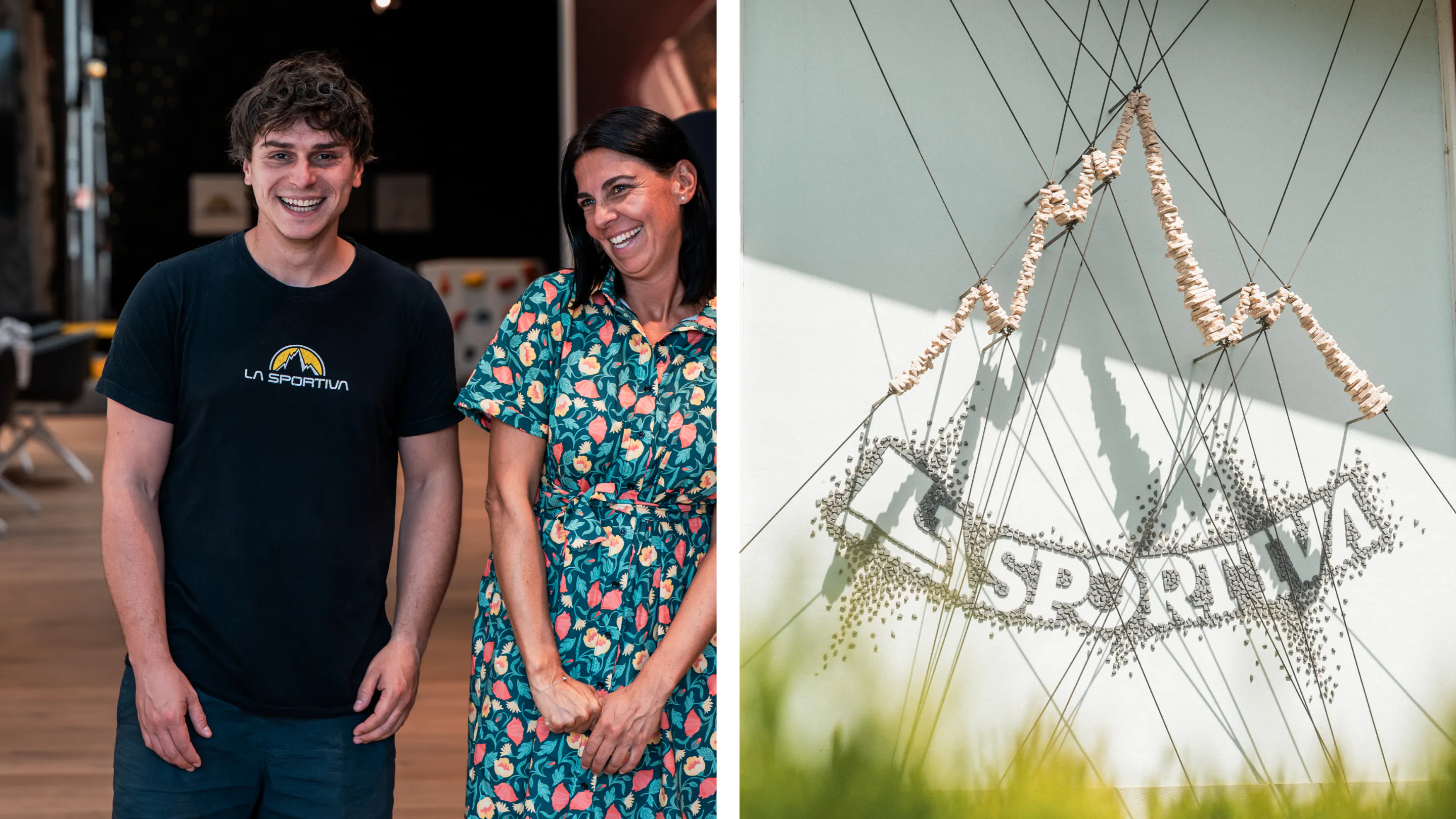
Instead, I'm greeted with a smile by Giulia Delladio and her brother Francesco, the fourth generation of the Delladio family to lead La Sportiva. Within moments, Giulia disappears into the kitchen before returning with coffee brewed the traditional way in a moka pot.
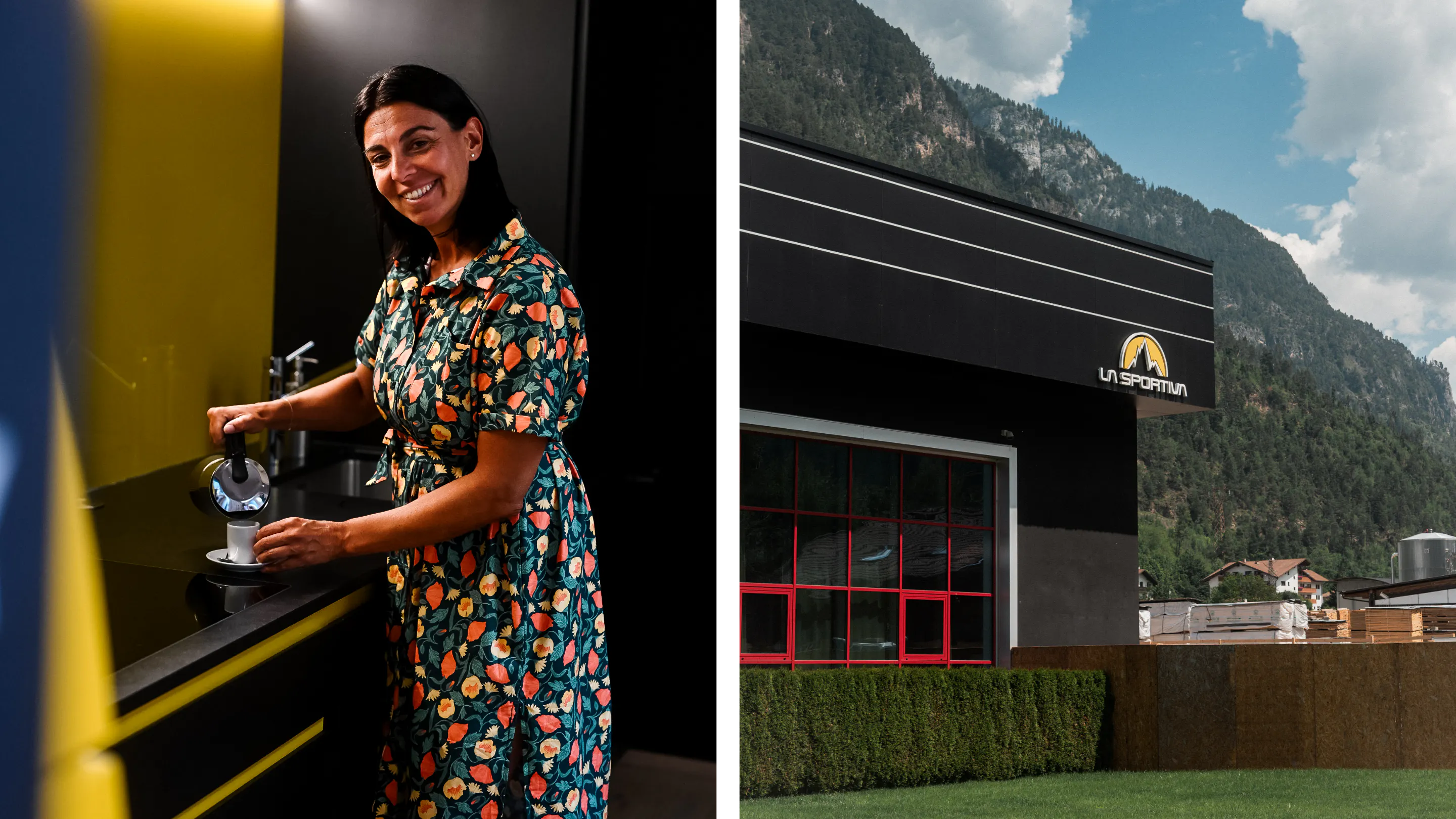
It's such a simple gesture, but somehow it tells me everything I need to know before a single interview question has been asked.
This isn't hospitality because members of the press have arrived. It's simply how you welcome people into your home.
Conversation flows effortlessly. There's no sense of hierarchy, no carefully constructed corporate messaging. Instead, there's an openness that immediately puts everyone at ease. Giulia talks with the same enthusiasm about her family history as she does the latest trail-running innovations, while Francesco quietly shares stories of the business they have inherited and continue to shape together.
It feels personal and it feels genuine. Most of all, it feels like family.
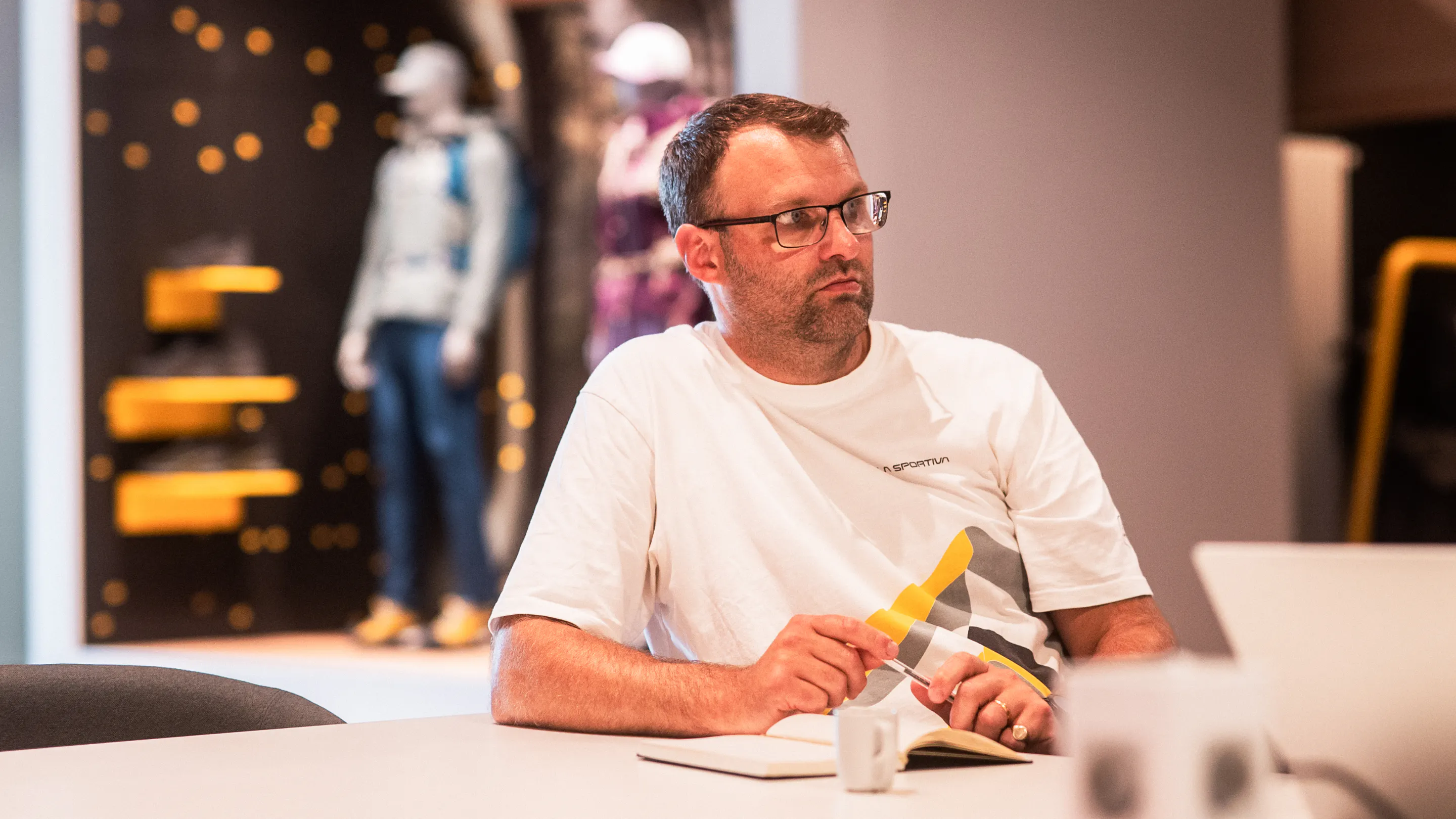
I can't help but notice the similarities with SportsShoes. Although separated by hundreds of miles and very different landscapes, the two businesses share a remarkably similar outlook. Like SportsShoes owner and Managing Director Brett Bannister, the Delladio family remain deeply involved in every aspect of the company. They aren't distant owners observing from boardrooms; they're immersed in the everyday decisions that shape the business, from product development to conversations with athletes and customers. The business hasn't simply remained in the family - it still behaves like one.
That philosophy becomes the thread running through every conversation we have during my visit.
As we walk through the headquarters, surrounded by almost a century of climbing boots, mountaineering footwear and trail-running shoes, it quickly becomes apparent that La Sportiva isn't defined by the products it makes. Those are simply the result of something much deeper.
This is the story of a family, a landscape and the connection between the two.
And a belief that the very best mountain equipment should be designed by the people who spend their lives in the mountains themselves.
Sitting down with Giulia, it's clear that although she represents the fourth generation of the Delladio family, she doesn't speak like someone who inherited a company. She speaks like someone who grew up inside it.
When I ask how early that journey began, she laughs.
"Everyone jokes that I was born at a trade show."
She isn't far from the truth.
"My father and grandfather were always preparing to leave for ISPO," she recalls. "I remember watching them packing the car, organising everything and getting ready. One day, when I was about nine years old, I asked if I could go with them."
There was one condition.
"My father said, 'If you're awake at five o'clock in the morning, with your own bag packed, you can come with us.'"
She smiles at the memory.
"I was ready."
That first trade show wasn't spent exploring the exhibition halls. Giulia made coffee on the stand, met customers, watched conversations unfold and absorbed everything she could about the family business. Looking back now, she sees it as the beginning of her own journey with La Sportiva.
"I think that's why people say I was born at a trade show," she laughs.
It's a wonderful story, but it also explains everything that follows.
Today, Giulia serves as Chief Strategy Officer, overseeing strategy, marketing and research and development across footwear, apparel and equipment. Yet listening to her speak, titles seem almost irrelevant. What comes across instead is a genuine sense of stewardship - a determination to protect something that began long before her and, she hopes, will continue long after.
That sense of responsibility isn't rooted in business strategy, it's rooted in place.
ㅤ
Designed by the Mountains
As Giulia begins talking about La Sportiva's history, one theme keeps resurfacing - the mountains.
Not as a backdrop. Not as an image on a catalogue cover. But as an active part of every decision the company makes.
When many global brands speak about authenticity, it often feels like marketing language. At La Sportiva, authenticity is measured in altitude.
The company's headquarters sits at around 1,000 metres above sea level in Ziano di Fiemme. Step outside the factory doors and within minutes you can be climbing, skiing or running some of Europe's most spectacular mountain terrain.
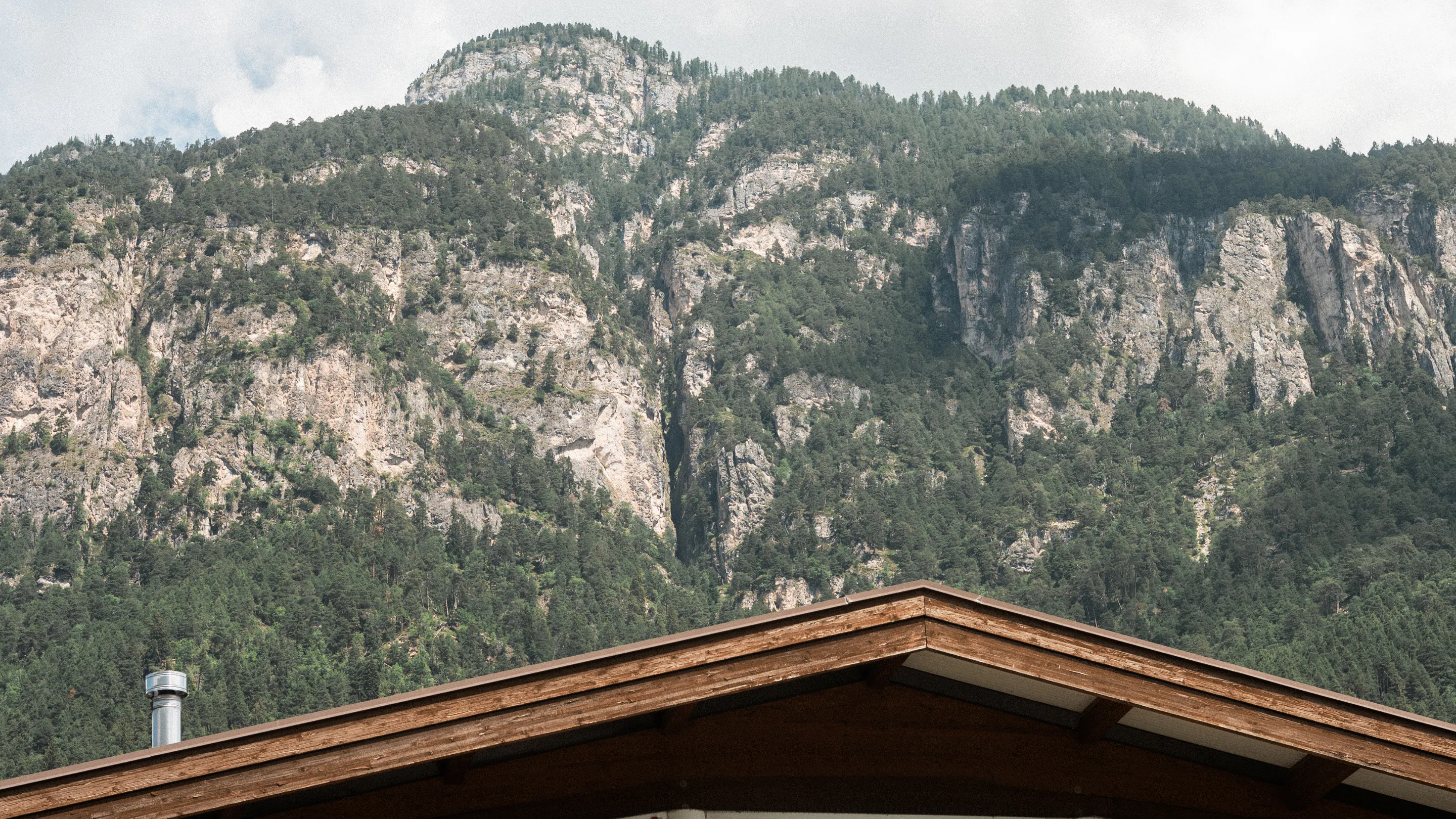
For Giulia, that proximity isn't a coincidence - it's the company's greatest advantage.
"Developing products for mountain sports in the mountains is what makes us different," she explains. "We can leave the office and be running, skiing, climbing or mountaineering within minutes. Our mountain guides and athletes come here to collect prototypes, test them on the trails and return with feedback. This isn't a slogan - it's simply how we work."
It's a philosophy that's refreshingly uncomplicated.
Rather than relying solely on laboratories and controlled testing environments, La Sportiva's products are refined in the conditions they were created for. The mountains surrounding the headquarters become an extension of the research and development department, with local athletes, guides and employees playing an active role in the evolution of each product.
It's difficult to imagine a more authentic testing ground. Yet remaining in the heart of the Dolomites isn't always the easiest business decision.
"From a global business perspective," Giulia admits, "it probably doesn't make much sense to be here. We're in a small mountain valley, far from the motorway. Everything takes longer. Trucks take longer to reach us. Logistics are more complicated."
She pauses before smiling.
"But I think it's one of the ingredients that makes everything work."
It's perhaps the most revealing answer of the entire interview.
In an age when many companies have relocated manufacturing and design centres in pursuit of efficiency, La Sportiva has chosen something altogether different. The Delladio family has remained loyal to the place where the business began because they believe the landscape itself continues to shape the products they create.
And as we walk through the headquarters, that belief is impossible to ignore.
Historic climbing shoes sit alongside the latest trail-running prototypes. Mountaineering boots that helped define the brand's reputation stand proudly next to carbon ski-mountaineering boots and modern race shoes destined for the next generation of mountain athletes.
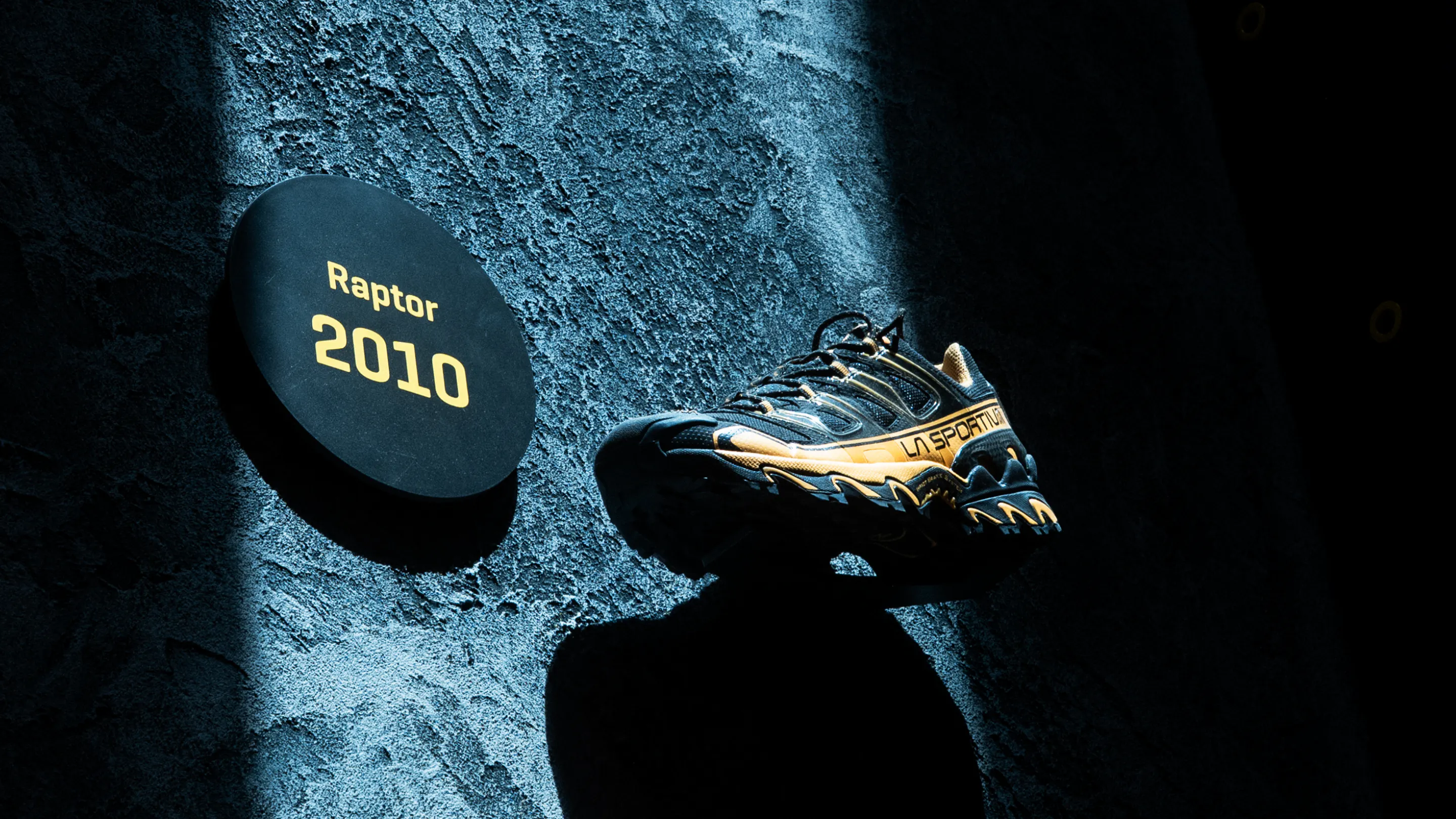
The story isn't one of reinvention - it's one of evolution. That becomes even clearer as Giulia reflects on where it all began.
Long before La Sportiva became synonymous with mountain sports, her great-grandfather, Narciso Delladio, was simply a skilled cobbler.
The company's earliest written record dates back to 1928, documenting Narciso's attendance at a trade fair in Milan. By then he was already repairing and crafting footwear for local farmers, forestry workers and the people whose livelihoods depended on the surrounding mountains. The timing was significant.
This corner of northern Italy had experienced profound political change following the First World War, and the borderlands of the Dolomites carried a rich yet turbulent history. Footwear wasn't a lifestyle product - it was an essential piece of equipment for everyday life in the mountains.
"My great-grandfather didn't start with a brand," Giulia explains. "He was simply making and repairing shoes for people who needed them."
That distinction matters.
La Sportiva wasn't created to sell a mountain lifestyle.
It was born because the mountains demanded practical, dependable footwear.
Nearly a century later, that same philosophy still underpins the company.
The products have changed beyond recognition, yet the reason for making them hasn't.
ㅤ
From Mountain Boots to Mountain Running®
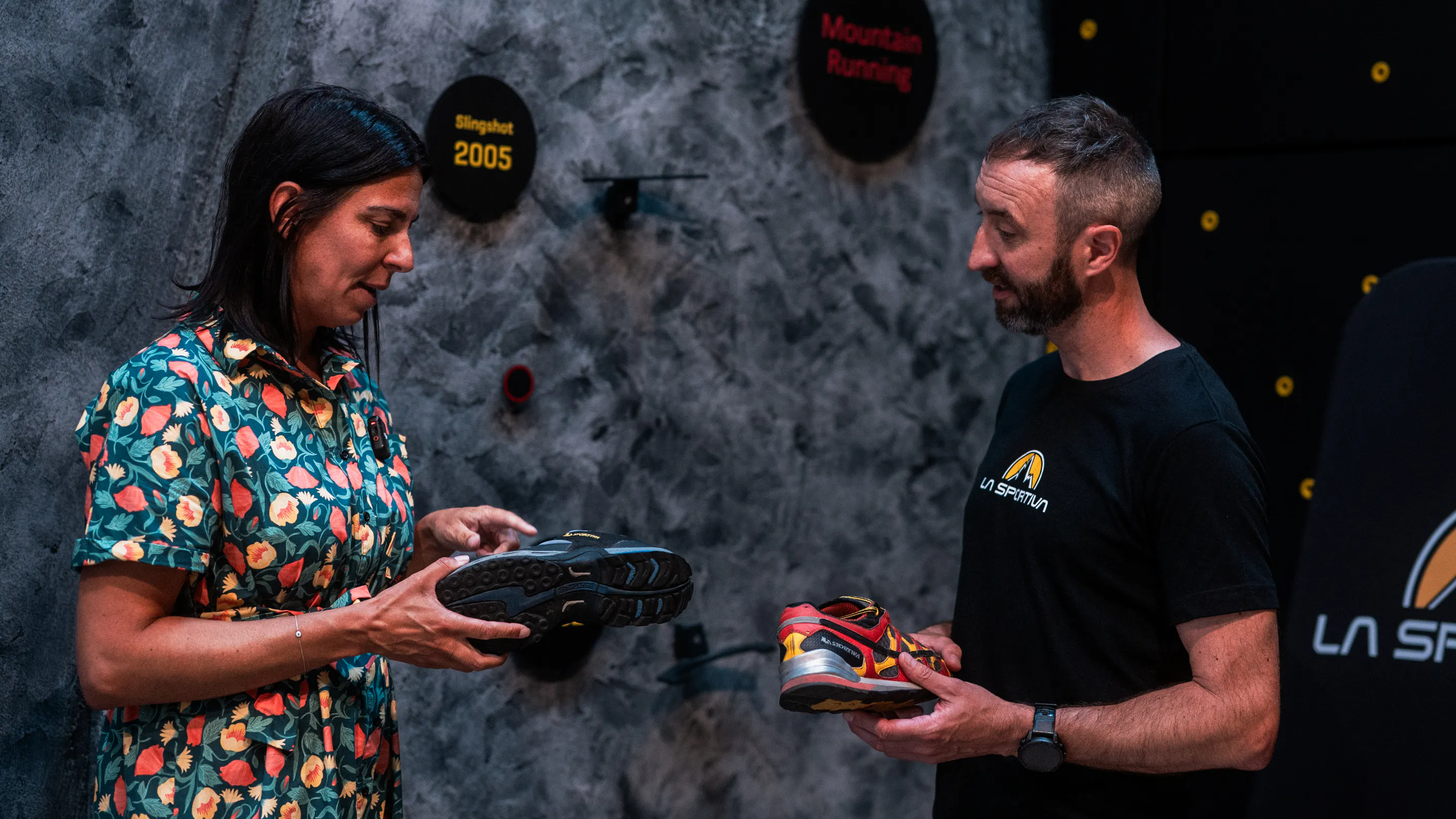
Standing in La Sportiva's archive, surrounded by almost a century of footwear, Ben picks up one of the company's earliest trail-running shoes.
By today's standards it looks almost unrecognisable. Lightweight, minimalist and unmistakably a product of its time, it represents the beginning of a journey that would eventually lead to shoes like the award-winning Prodigio Pro.
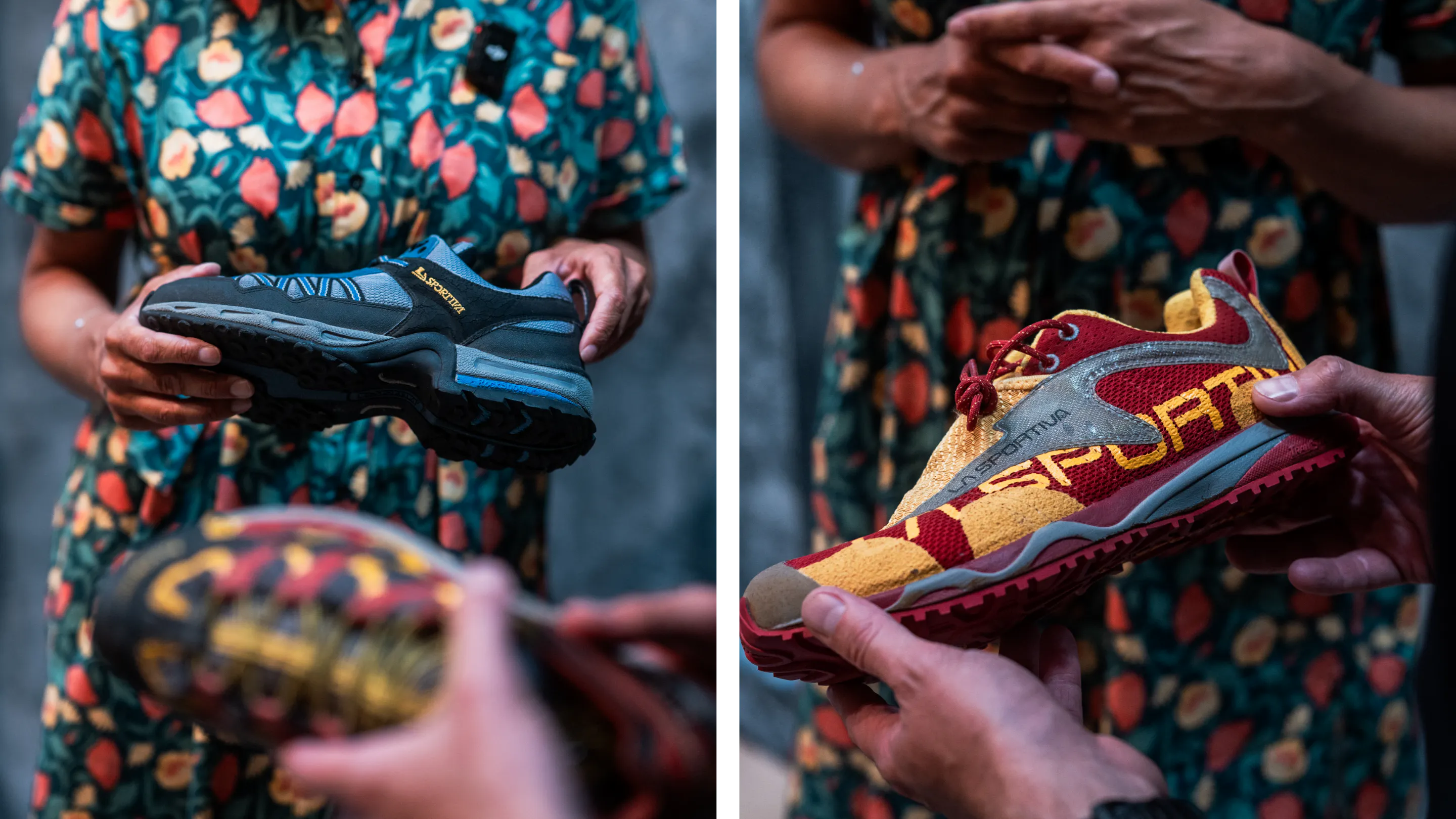
But what fascinates Ben isn't just the shoe itself. It's how La Sportiva arrived there.
Unlike many running brands that evolved from the road before venturing off-road, La Sportiva approached trail running from an entirely different direction.
"We didn't build up from road running," Giulia explains. "We came down from mountaineering."
It's a deceptively simple sentence, but perhaps the best explanation of La Sportiva's philosophy.
At the turn of the millennium, the company was renowned for climbing shoes and mountaineering boots. Trail running, as we know it today, was still in its infancy, and few could have predicted how rapidly the sport would grow.
The inspiration didn't come from market research or trend forecasting. It came from the people working inside the company.
"Everyone was going into the mountains wearing hiking boots," Giulia recalls. "Then people started saying, 'These are too heavy. We want to move faster.' They began cutting pieces off their boots, trying to make them lighter."
She laughs at the memory because it was innovation in its purest form. Not driven by commercial opportunity, but by curiosity.
The people designing mountain boots were the very same people who spent their weekends climbing peaks, scrambling across ridgelines and exploring the trails surrounding Ziano di Fiemme. Naturally, they wanted equipment that allowed them to move through the mountains with greater speed and freedom.
Those experiments eventually led to the company's first dedicated Mountain Running® shoes. Even the name reflected a different way of thinking.
"We wanted to call it Mountain Running because that's where we came from," Giulia explains. "We weren't coming from road running. We wanted people to understand that our roots were in the mountains."
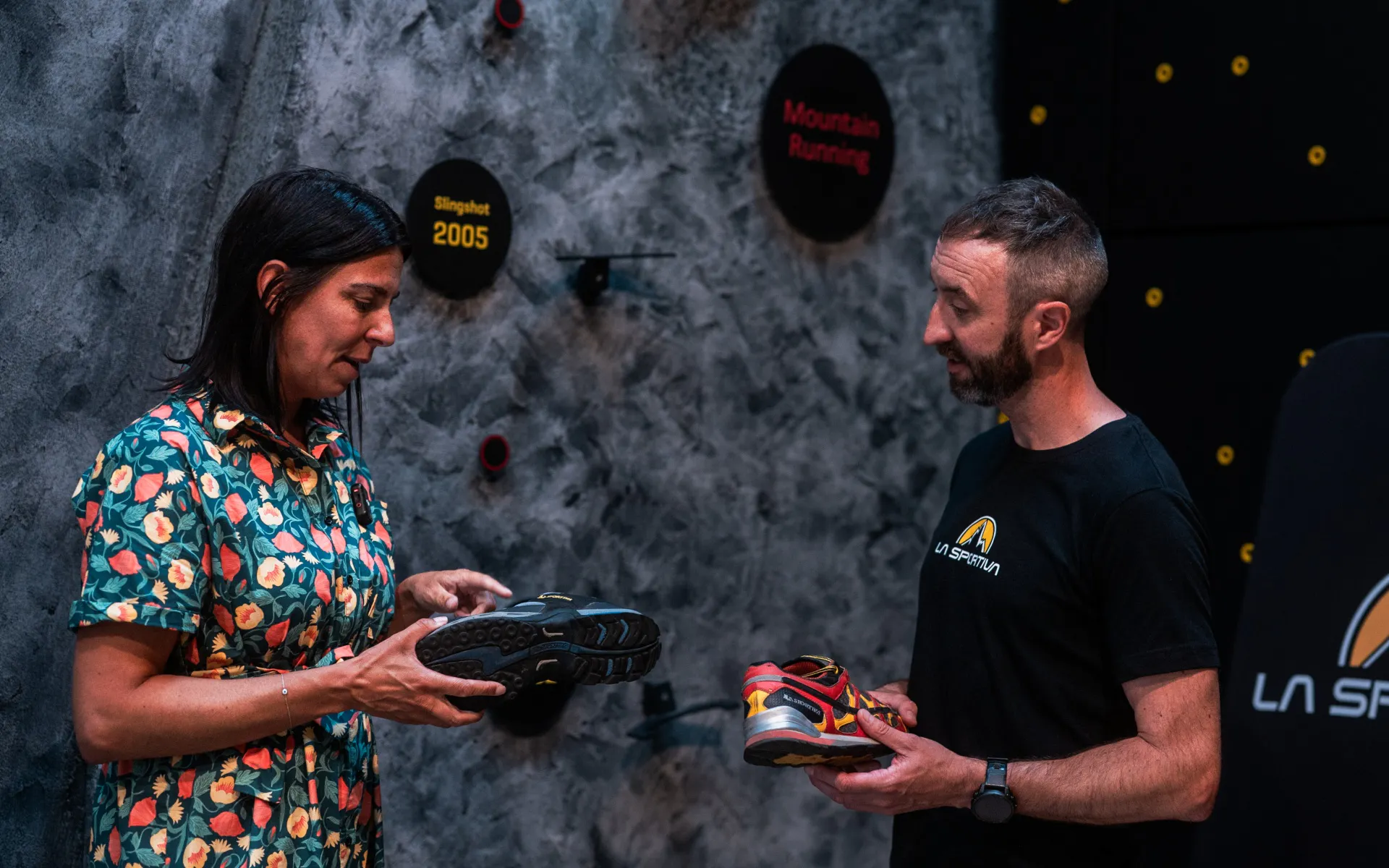
Looking at those early models today, it's easy to see the mountaineering influence. The climbing-inspired lacing system, the sticky rubber compounds developed through decades of climbing footwear and the precise fit. Even the way the shoes were intended to move across technical terrain rather than smooth forest tracks.
Everything about them reflected the company's heritage.
Of course, the first attempts weren't perfect.
"They were very light," Giulia admits. "But they weren't always stable enough on the descents. We were learning step by step."
That willingness to learn becomes another recurring theme throughout our conversation. Unlike companies entering an established market, La Sportiva wasn't following a blueprint - it was writing its own.
As the years passed, each generation of shoes built upon the lessons of the last. More grip. Greater stability. Improved durability. Better protection without sacrificing the light, agile feel that had become synonymous with the brand.
"You can still see the connection with hiking, but you can also see the point where La Sportiva really started creating the kind of shoes we'd recognise today."
"We were pioneers," she says. "At the beginning, we didn't know anything about running."
It's a wonderfully honest admission.
The company already understood mountains. Now it had to learn a new language.
It organised its own Mountain Running Cup, introducing runners to a brand they knew only for climbing and mountaineering. Shoes found their way into race finishers' packs. Athletes began trying them and word slowly spread.
"Nobody really knew us in trail running then," Giulia remembers. "We had to reinvent ourselves while keeping our heritage."
Twenty years later, La Sportiva has become one of the defining names in mountain running and a principal partner of the Lavaredo Ultra Trail - one of the world's most iconic trail races.
Looking back through the archive, it's remarkable how naturally that evolution feels.
Nothing appears forced. Each new product is simply another chapter in the same story.
A story that began with mountain boots. And one that never really left the mountains behind.
ㅤ
Heritage Isn't Fashion
As we continue exploring La Sportiva's archive, Ben pauses in front of a display containing one of the company's most iconic climbing shoes. By modern standards, it still looks remarkably contemporary. Bold flashes of purple and yellow sit alongside the instantly recognisable La Sportiva logo, creating a design that feels as relevant today as it did more than four decades ago.
Ben remarks that many people would happily wear the shoe now, including himself.
Giulia smiles. The colours weren't inspired by fashion - they were inspired by the mountains.
"My father and grandfather wanted to do something different," she explains. "At the time, climbing shoes were mostly brown, black or grey. But every day my grandfather was walking in the mountains and seeing the alpine flowers - the yellows, the purples, all these beautiful colours. He simply asked, 'Why can't our shoes look like that?'"
It's another wonderfully simple story and another reminder that La Sportiva has always looked first to its surroundings rather than to the market.
Today, those same colours have become part of the brand's identity and what once seemed bold has become timeless.
The conversation naturally turns to the growing popularity of outdoor footwear beyond the mountains.
Trail-running shoes are no longer confined to races and rugged terrain. Increasingly, they're being worn on city streets, in cafés and as everyday footwear, appreciated as much for their aesthetic appeal as their technical performance.
Ben asks whether La Sportiva has consciously embraced that shift.
Giulia's answer is immediate.
"We don't really talk about fashion," she says.
It's not a dismissal of changing tastes -far from it. She recognises that many people are drawn to outdoor brands because of what they represent. Wearing a technical mountain shoe can express a connection with the outdoors, even if the wearer is walking through Milan rather than across the Dolomites.
"People want to feel part of a community," she reflects. "Sometimes they choose our shoes because they identify with what the brand represents."
But she draws an important distinction. La Sportiva has never designed products simply to satisfy fashion trends - performance always comes first. Another shared value with SportsShoes.
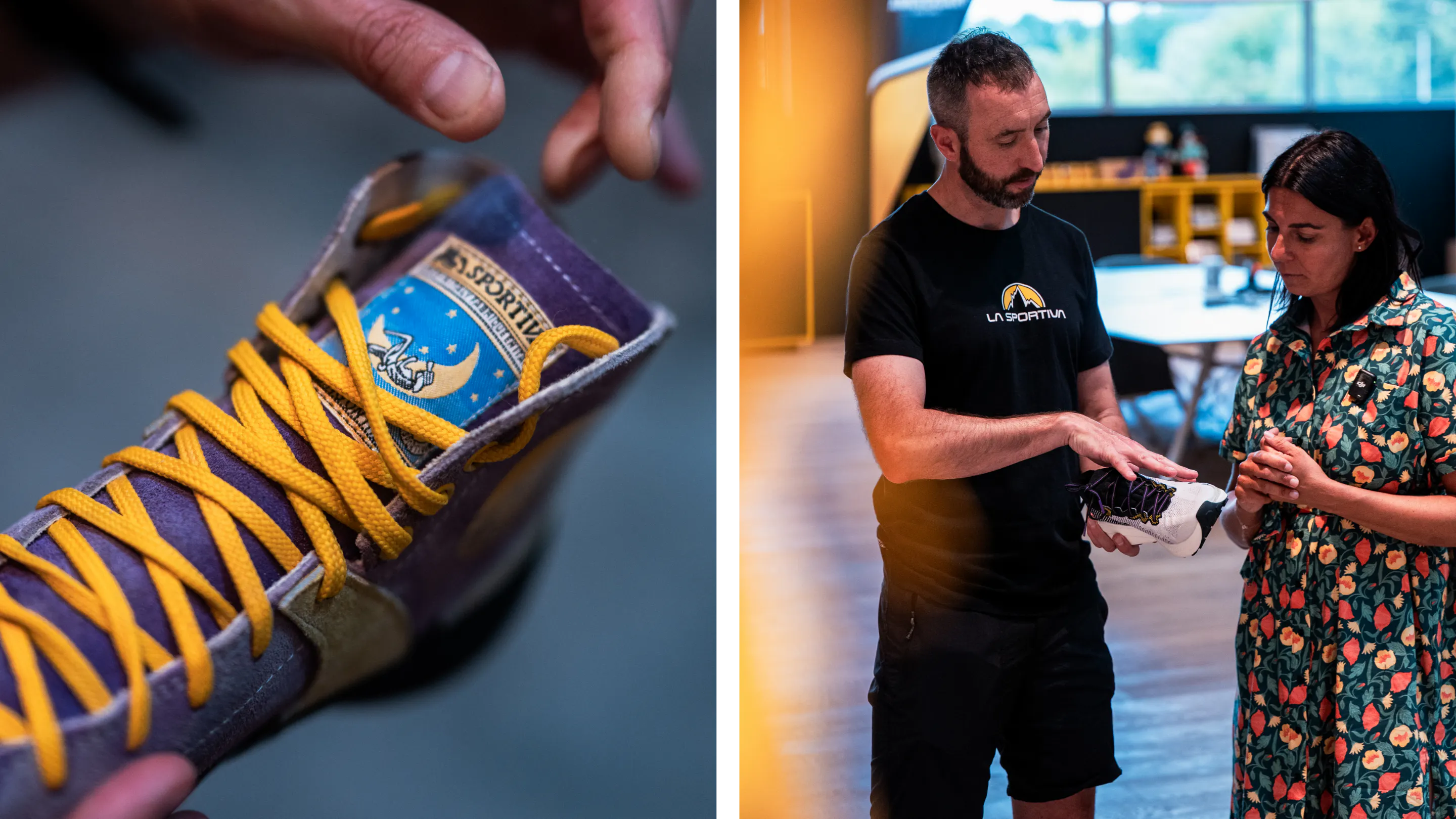
If a heritage product returns to the collection, it isn't because nostalgia sells. It's because the company believes there is still a technical story worth telling.
Giulia points to the reintroduction of classic models such as the TX4, updated with modern materials and construction while retaining the design language that made them iconic in the first place.
"When we revisit our heritage," she explains, "we always want to add something. We want people to buy the shoe because they need it, not simply because it looks good."
It's a philosophy that feels increasingly rare.
In an industry where technical products often become lifestyle icons almost overnight, La Sportiva has resisted the temptation to chase trends.
Instead, it has allowed authenticity to become its greatest design language. Perhaps that's why those early climbing shoes still feel so contemporary today.
They weren't created to follow fashion - they were created to solve problems. The fact they also became beautiful was almost incidental.
Walking through the archive, it's impossible not to notice another recurring theme. Every product tells a story - not just of innovation. But of the people who imagined it, tested it and trusted it in the mountains long before it ever reached a shop shelf.
For Giulia, that's what heritage really means.
It's not about preserving the past - it's about carrying its lessons into the future.
ㅤ
Twenty Years in the Making
As we move from the archive into La Sportiva's product development space, the conversation naturally shifts from heritage to the future.
On the walls are exploded shoe constructions, prototype components and the latest additions to the company's trail-running line-up. It feels less like a showroom and more like a workshop - ideas laid out in plain sight, waiting to be refined.
Ben immediately reaches for the Prodigio Pro, arguably the brand's most successful trail running shoe of all-time.
Having spent years immersed in the trail-running industry and watching countless new shoes come and go, his enthusiasm is unmistakable.
"I honestly think this was one of the breakthrough trail shoes of last year," he tells Giulia. "What impressed me most wasn't just the shoe itself - it was how people discovered it. We didn't have to push it. It sold through recommendation and word of mouth."
He laughs as he remembers customers repeatedly asking if SportsShoes had another delivery arriving.
"People were constantly asking if we had their size. We'd receive stock one day and by the next it had gone. I couldn't even get a pair myself for months."
Giulia smiles.
Recognition is clearly appreciated, but the conversation quickly returns to the team behind the product.
"We have to congratulate Nicola," she says, referring to La Sportiva's footwear designer and developer. "He's done an incredible job."
It's another subtle insight into the company's culture.
Throughout the day, Giulia rarely speaks about individual success. Credit is shared naturally - with designers, developers, athletes and colleagues. The products may carry the La Sportiva name, but behind every shoe is a team of people whose expertise has been built over decades.
Listening to the conversation, it's clear that the Prodigio Pro wasn't designed to chase a market trend. It represents the culmination of twenty years spent understanding how mountain athletes move.
"We took everything we had learned from climbing and mountaineering," Giulia explains, "and gradually brought that knowledge into running."
That philosophy now extends across the entire trail-running collection.
The Prodigio family has introduced La Sportiva to a wider audience than ever before, offering high-performance footwear that remains unmistakably rooted in the company's mountain heritage while appealing to runners tackling everything from daily training to the world's toughest ultra-distance races.
But innovation never stands still.
As our conversation continues, Giulia introduces one of the products she is most excited about for the seasons ahead.
The Talento Pro.
Launching as part of the Spring/Summer 2027 collection, the Talento Pro represents the next evolution of La Sportiva's performance trail-running range. While the Prodigio Pro has become synonymous with long-distance racing and all-day comfort, the Talento Pro has been developed with a different athlete in mind.
"It's focused on shorter and medium-distance races," Giulia explains. "The priorities are lightness, precision, stability and technical performance."
Ben picks up the shoe, turning it over in his hands. Even at first glance, the family resemblance is obvious.
The design language is unmistakably La Sportiva, yet everything appears more purposeful, more aggressive - built for speed across technical mountain terrain.
"You can see the learnings from the Prodigio Pro," Ben observes.
Giulia agrees.
"Exactly. Everything we've learned over the years comes together here. The Prodigio Pro remains our long-distance racing shoe, while the Talento Pro is designed for shorter, faster efforts. Together, they give us a complete answer for mountain runners."
It's striking how naturally she talks about evolution rather than revolution.
There are no grand claims of reinventing trail running and no promises of miracle technologies.
Instead, every new product feels like another careful step forward, informed by decades of experience and thousands of hours spent testing footwear where it matters most - on the trails surrounding the Dolomites.
Looking around the room, surrounded by prototype components and development samples, it becomes obvious that innovation at La Sportiva isn't measured by how dramatically a shoe changes from one season to the next. It's measured by how much closer each generation comes to the mountains that inspired it.
ㅤ
More Than a Footwear Brand
As the afternoon draws to a close, I find myself reflecting on something Giulia said almost in passing.
"We're not just owners."
It isn't presented as a mission statement or a carefully crafted piece of brand messaging. In fact, it's never really explained at all. It doesn't need to be.
Over the course of a few hours, Giulia and Francesco (pictured together below) have already demonstrated exactly what she meant.
They welcomed us personally.
They shared stories of their great-grandfather, Narciso Delladio, with genuine pride rather than polished corporate language.
They spoke openly about the challenges of remaining in a small mountain valley when the easier business decision might have been to leave decades ago.
They celebrated the work of their designers, developers and athletes before talking about their own achievements.
And before we'd even discussed a single shoe, Giulia made us all a coffee.
Looking back, that simple gesture somehow captures everything La Sportiva represents.
For almost a century, the company has resisted the temptation to become something it isn't.
It hasn't chased fashion.
It hasn't forgotten where it came from.
And it hasn't allowed growth to dilute the values that made it successful in the first place.
Instead, it has remained remarkably faithful to its origins.
That doesn't mean standing still - far from it.
From the earliest mountain boots handcrafted by Narciso Delladio to the Prodigio Pro and the forthcoming Talento Pro, La Sportiva's products have evolved continuously. Materials have changed. Technologies have advanced. Athletes have pushed the boundaries of what is possible in the mountains.
But the philosophy behind them remains almost unchanged.
Design products in the mountains.
Test them in the mountains.
Listen to the people who spend their lives there.
Then make them a little better than the generation before.
It's a refreshingly patient approach in an industry that often seems obsessed with the next innovation.
Leaving Ziano di Fiemme, I realise the most memorable part of my visit isn't a particular shoe or a piece of technology. It's the overwhelming sense that La Sportiva belongs exactly where it is.
The company feels inseparable from the mountains that surround it.
Its history is intertwined with the local community.
Its products are shaped by the terrain outside its windows.
And its future is being guided by a family that understands they are not simply running a business - they are protecting a legacy.
For many British runners, La Sportiva is a trusted name in mountain footwear. Spend a day at its home in the Dolomites, however, and you begin to understand that it's something much deeper than that.
It's part of the landscape.
Part of the community.
Part of the Delladio family.
And perhaps that's the real secret behind La Sportiva.
Almost a century after Narciso Delladio first began making shoes beneath these mountains, the company continues to prove that progress doesn't have to come at the expense of heritage.
If anything, its future looks stronger because it has never forgotten where it came from.
ㅤ
Welcome
Welcome to the SportsShoes Trail Hub! We’ve teamed up with the experts to bring you the very best advice in all things running - from training, to nutrition and even motivation. Alongside tips from you, our running community, and the latest news and releases, we hope we’ll inspire you to run stronger,better and happier – because as we know, it’s no fun standing still.