
How to stay safe when Trail Running & Hiking
Enjoying the great outdoors is one of life’s simplest pleasures, but every adventure comes with inherent risks. With more people hitting the trails than ever before, staying safe requires more than just the right gear.
This guide is designed for trail runners and hikers of all levels. It focuses on practical safety, preparation, and decision-making in changing outdoor conditions, giving you the confidence to look after yourself and others should things take a turn for the worse.
ㅤ
Trail Running & Hiking Safety Checklist
Before setting off, complete this quick safety checklist:
● Route planned and checked
● Weather forecast reviewed (including mountain conditions)
● Someone informed of your route and expected return
● Appropriate clothing packed for changing conditions
● Food and water carried
● Navigation tools prepared (map, compass, GPS device)
● Phone fully charged and stored safely
● Headtorch carried if there is any chance of delay
● Emergency bivvy or survival blanket packed
● Whistle included for emergency signalling
This checklist helps reduce preventable incidents and is recommended before every trail run or hike.
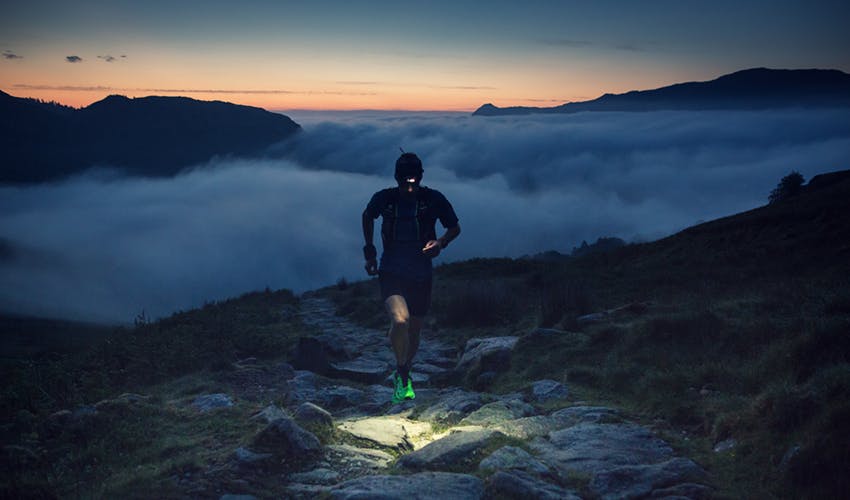
Photo credit: Dave MacFarlane/INOV8
ㅤ
How to Prepare Safely for a Trail Run or Hike
Planning and preparation are key aspects of staying safe on the trail. If you are running or hiking on unfamiliar paths and trails, especially in extreme and dangerous environments, then it’s extremely important to spend some time carefully planning your adventure. Plot the route on a map, or by using detailed mapping software to get an estimation of the overall time, distance and elevation. Consider how long it will take you to complete the route based on the terrain and difficulty etc. before setting off and make sure that your goal is achievable in terms of your physical capability. Think carefully about ground conditions - a fast, dry run in the summer is likely to be slow and boggy after a spell of wet weather.
Remember to always tell someone where you plan on going and when to expect your return. Follow your intended route and direction of travel.
Before setting off, ensure your route matches your fitness, experience level, and current environmental conditions. Always prioritise safety over distance or speed targets.
ㅤ
Why Checking the Weather is Essential
Always check the weather forecast beforehand and if in doubt then play it safe – do not take any unnecessary risks. The Mountain Weather Information Service (MWIS) will give you the most accurate forecast for high ground and all major UK summits.
Make sure that you start in plenty of time and be aware of when the sun will set, especially during the Autumn and Winter months. Losing light during a run or hike can make a route extremely dangerous and difficult to navigate.
Weather conditions in mountainous environments can change rapidly, so always check mountain-specific forecasts rather than relying on general low-level forecasts.
Where possible, download your route or offline maps before setting off. Mobile signal can be unreliable in remote areas, making preparation even more important if conditions deteriorate.ㅤ
Always wear and carry the correct kit and gear
Almost everyone has made the mistake of being underprepared for a run or hike, often guilty of wearing the wrong kit or not carrying enough emergency gear or supplies. But by doing so, you can avoid the risk of getting lost, injured, or in extreme cases, prevent a fatality.
ㅤ
Essential Trail Running & Hiking Kit:ㅤ
Appropriate Clothing
If you are venturing onto the hills and mountains then you must prepare for unpredictable changes in the weather. Avoid the temptation to dress specifically for temperatures and conditions on lower ground as it’s likely to change significantly as you begin to ascend, even during the summer months. Always carry extra clothing for extra warmth and protection just in case you need it.
Layering your clothing allows you to prepare for and cope with a range of temperatures, without the need to completely remove or change a single outfit. There are 3 main parts to the layering system:
● Base Layer
● Mid Layer
● Outer Layer
Layering is essential for trail running and hiking because effort levels fluctuate, followed by sudden exposure to wind, rain, or cold when you stop moving.
ㅤ
● Base Layer
Start by wearing a suitable technical base layer, which is designed to sit next to your skin and wick away moisture during exercise. We highly recommend choosing a light, hard-wearing fabric will help to regulate your body temperature, keeping you cool and warm during both the summer and winter months.
ㅤ
● Mid Layer
Choose a suitable mid layer to wear over your base layer. This is the insulating layer which will help you to generate and retain your body heat and is the key to providing comfort and warmth for any outdoor adventure. As a lightweight option, suitable for trail running, you can either wear next-to-skin or above a base layer for added warmth.
ㅤ
● Outer Layer
The outer layer provides protection from the elements and it’s always advisable to carry a lightweight jacket and trousers for every type of outdoor activity. In dry conditions, particularly during the summer months, a windproof jacket is usually a sufficient outer layer. However, packing waterproof layers is highly recommended as you never know when it might rain. There are plenty of lightweight options available and it’s always better to take them and not need them, than regret not having them with you.
If you’re hiking rather than running, make sure that you carry a substantial outer layer, which will help keep you both warm and dry. Check that your clothing has taped seams, because this ascertains waterproofing and helps to strengthen garments.
ㅤ
Trail Running Shoes & Hiking Footwear
Wearing the correct shoes will provide added comfort, protection and grip - the latter particularly important when moving over unpredictable and challenging terrain. Most trail shoes and walking boots are also available in waterproof GORE-TEX models.
As an alternative to traditional walking boots, lighter hybrid versions are now available for fast hiking. These durable, lightweight shoes deliver unprecedented strength and durability over any terrain in all weather conditions.
ㅤ
Map, Compass & Navigation
Make sure you always carry a compass and waterproof map for navigation, especially when exploring new and potentially dangerous environments. Most importantly, learn how to read a map and use a compass. Constantly check your location by identifying exactly where you are on the map by using the surrounding features and landmarks. In the event of an emergency, you can also use an accurate grid reference to identify and share your precise location.
Downloading GPX files to sports watches and devices is advisable, but should only be used in conjunction with a physical map and compass. Never solely rely on a GPS device, as you may lose signal or be encouraged to follow a suggested route over dangerous and unpredictable terrain.
Shop all Sports Watches and GPS Devices
GPS watches and smartphone mapping apps can significantly improve navigation accuracy when used offline. However, they should always be treated as a backup due to battery limitations, signal loss, and potential routing errors.
Always carry a whistle to help attract attention in an emergency.
ㅤ
Headwear and Gloves
Wearing or carrying a hat and gloves is absolutely essential, as both will give you added warmth and protection, especially in cold weather. Wearing a hat or cap during the summer months will also help to protect you from the sun, ideally one with a front peak or rear neck protector.
ㅤ
Headtorch
If you’re planning an outdoor activity during the evening or at night, then you will need a suitable and reliable headtorch, in order to help you navigate safely. Always make sure your headtorch is fully charged and ideally carry spare batteries just in case.

Photo credit: Silva
ㅤ
An Emergency Survival Blanket or Bivvy
This ultra-light outdoor essential is potentially life-saving. Emergency blankets or bivvies are compact, lightweight and easy-to-pack, usually weighing less than 100g, it and can provide vital protection in an emergency situation, as well as doubling up as a ground sheet, gear cover or first aid blanket
ㅤ
Food and Hydration
Always carry some food and water with you, even if it’s just an energy bar and a small amount of water. In the event of an emergency or sudden loss of energy, these extra calories and fluids are essential for survival. For your water we recommend taking a soft flask as they are lightweight, reusable, easy to carry and store neatly inside pockets when empty.
For longer efforts or warm conditions, consider carrying electrolytes to help maintain hydration and reduce fatigue.
Carrying your Gear
For short and fast activities, we recommended that you use a lightweight race pack to carry your essential items, either over your shoulders or around your waist. All packs have been ergonomically designed to allow you easy access to different pockets, saving you valuable time and energy whilst on the move. Many of these packs also have in-built hydration flasks or pockets specifically designed for carrying fluids. In the event of an emergency, almost every design now has a small whistle built into the design to help attract the attention of others and signal the call for help.
For hiking, we recommend using a larger and more substantial outdoor backpack to carry all of your essential items of clothing and kit. Generally, these types of activities last longer, so it’s important that you have enough space to store everything you need.
ㅤ
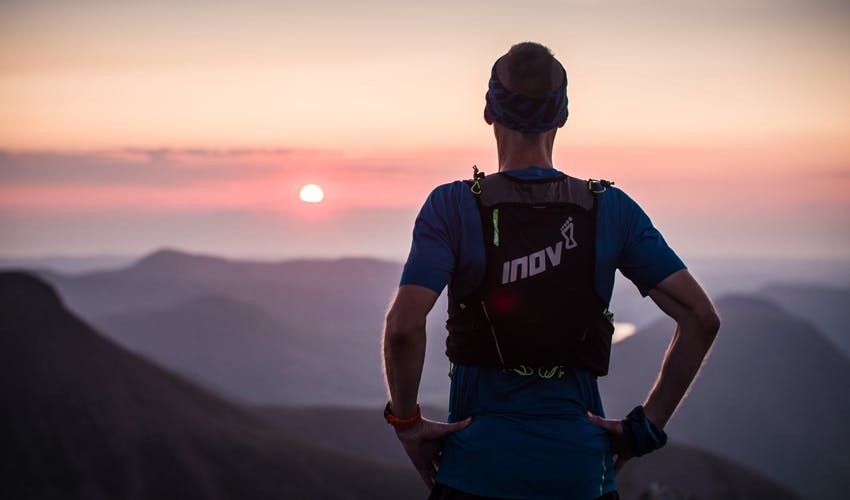
Photo credit: Dave MacFarlane/INOV8
ㅤ
Making an Emergency Call
Always carry your phone in case of emergency, especially if you are exercising alone. Make sure your phone is fully charged and safely stored in a waterproof bag or case.
Only contact Mountain Rescue in an extreme emergency and when absolutely necessary.
Prepare an ETHANE report for the emergency services:
E exact location
T type of incident
H hazards
A access
N number of casualties and their injuries
E what emergency services do you need.
Should you need to make an emergency call, dial 999 or 112. Ask for the Police, and then Mountain Rescue. To use the emergencySMS service: Text 999 and send Police + details of incident + location.
If possible, try and provide an accurate grid reference of where you are located, the OS Locate app will provide you with a grid reference.
OR use what3words (see below).
Only contact Mountain Rescue in genuine emergencies where there is serious risk to life or injury
ㅤ
Download WHAT3WORDS
What3words is a geocode system for the communication of locations. Every 3 metre square of the world has been given a unique combination of three dictionary words. This can be used to locate your exact global position in the event of an emergency, allowing emergency services or Mountain Rescue to pinpoint where you are.
You can download the what3words app to your phone for free.
A typical location example might look like this: ///download.apple.dog
When using what3words in an emergency, accuracy is critical:
● Ensure correct spelling and word order or your what3words.
● Confirm your location is stable and safe before sharing it
● Do not move once you have provided your coordinates if instructed by emergency services
ㅤ
Want to learn more? Visit our Health and Wellbeing category to help look after your body, mind and personal safety with our expert advice and guidance.
Welcome
Welcome to our SportsShoes Health & Wellbeing Hub! Look after your body, mind and personal safety with our expert advice and guidance.