Everything Nobody Tells You About Running 100 Miles
You've entered your first ultra, and you're studying the mandatory kit list.
Waterproof jacket. Headtorch. Warm hat and gloves. Survival blanket.
What it doesn't tell you is what happens after ten hours on your feet.
It won't explain how often you think about changing your socks. Why a good cup of tea could be the rescue remedy you need at three o'clock in the morning. Or how, somewhere between one aid station and the next, you'll completely stop caring where you go to the toilet.
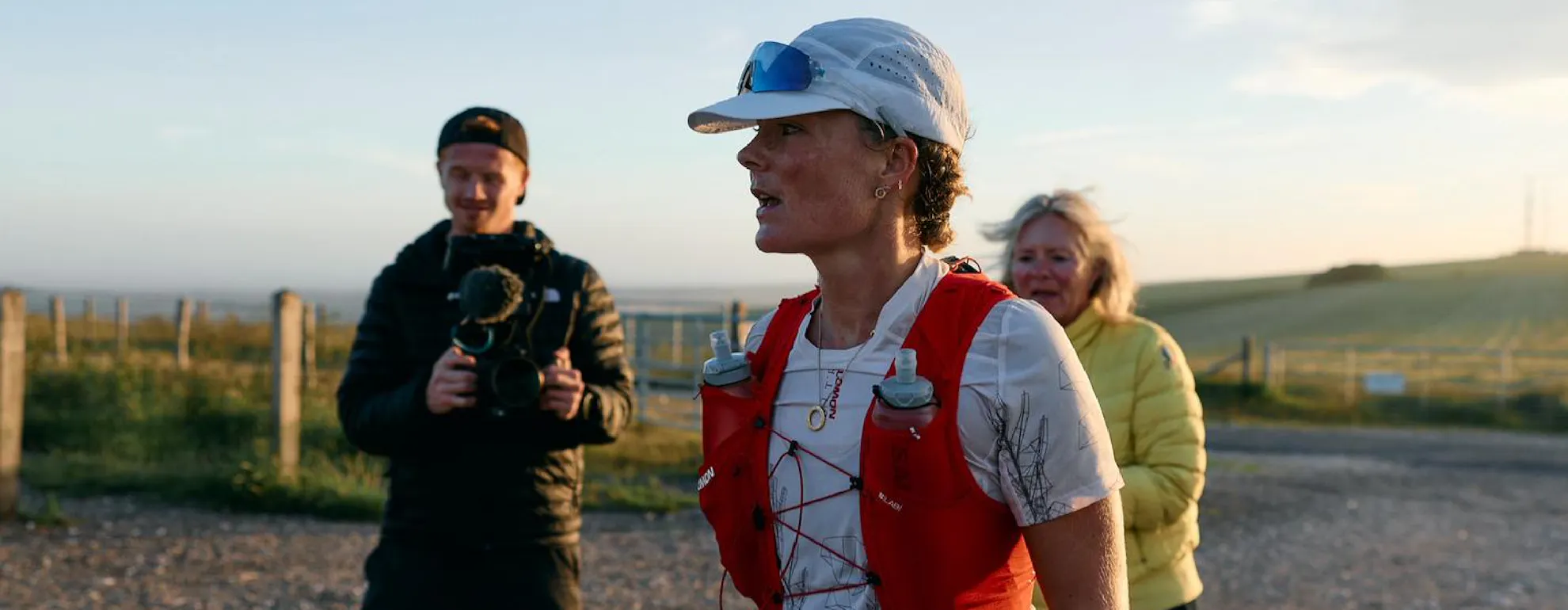
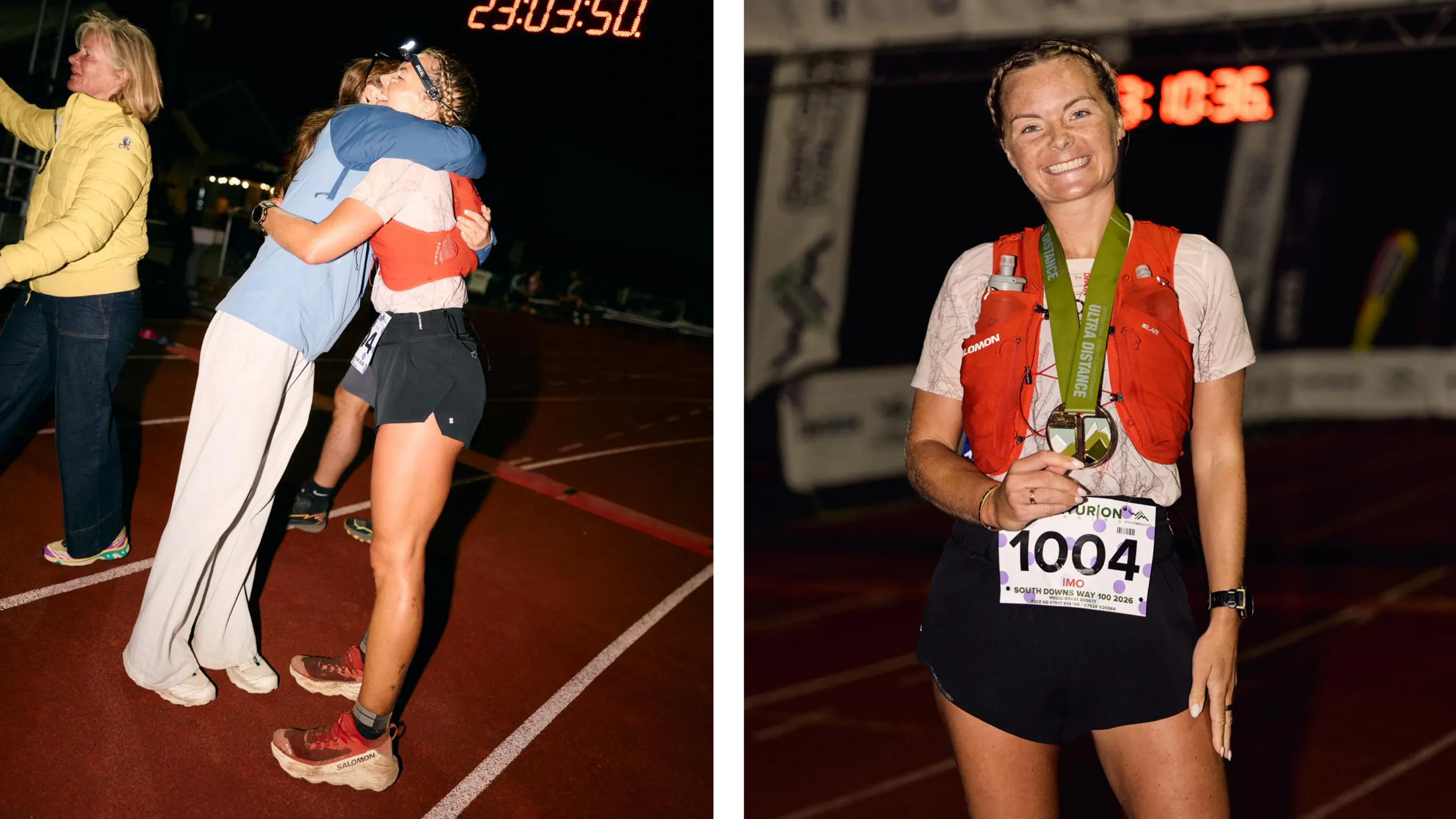
Ultra runner and Salomon athlete Imo Boddy knows these realities better than most. In 2022, she became the youngest known woman to run the length of Britain, covering more than 800 miles from John O'Groats to Land’s End.
Advice on preparing for an ultra race can be easy enough to find, training plans, nutrition strategies and checklists. But sometimes it's the practical realities that are harder to uncover.
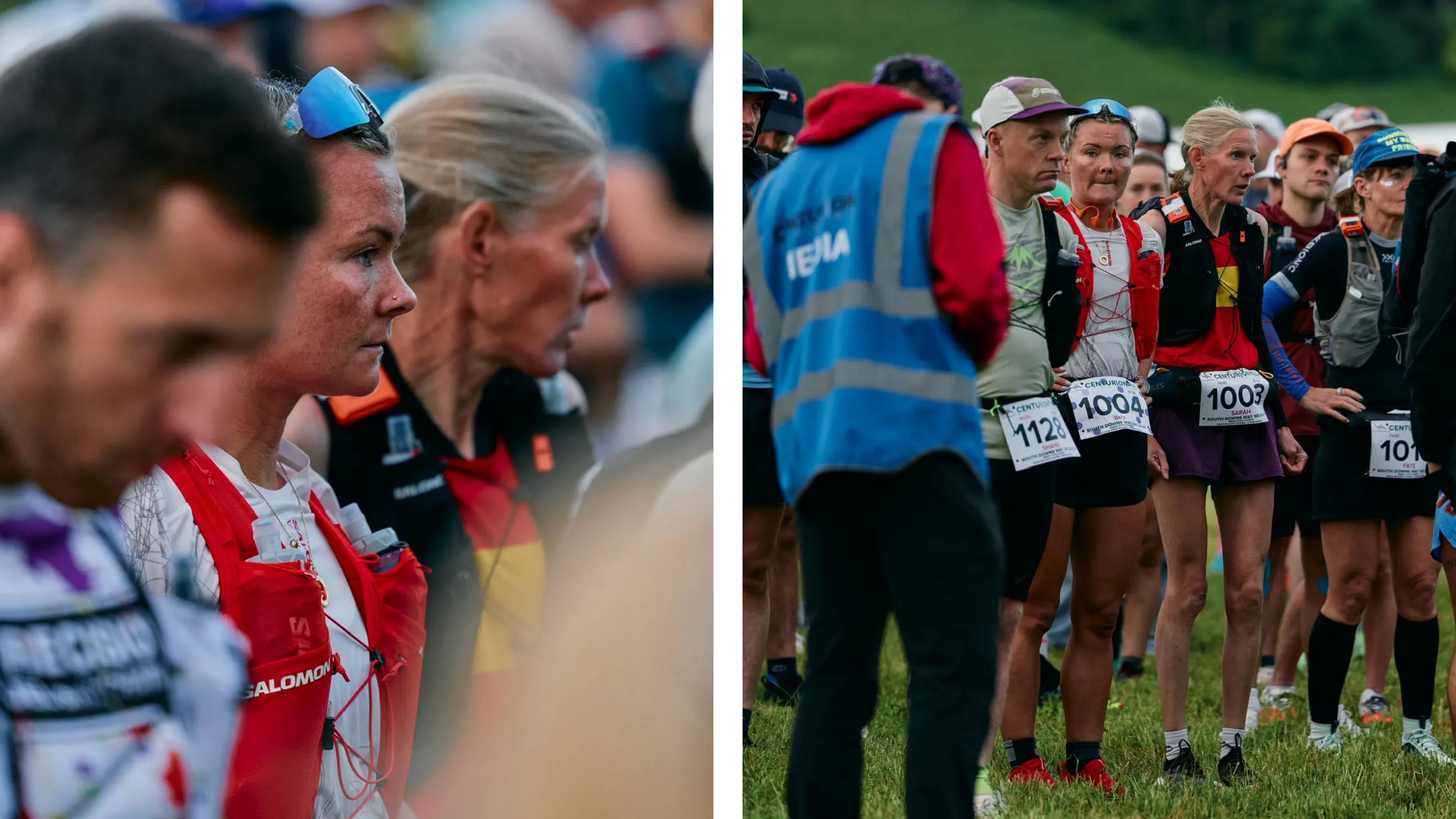
So, instead of talking to Imo about her most recent race experience at the South Downs Way 100 miles, we asked her the questions most runners are quietly wondering about.
The answers reveal a side of ultra running that rarely makes it into the guides.
What Doesn't Make The Mandatory Kit List?
Not mandatory. Not glamorous. But, as it turns out, often essential.
“Gin-Gins.”
Imo tells us, “They're little hard-boiled ginger sweets which help combat the sickness feeling”
Like many ultra runners, she knows too well that long-distance running isn't just a test of fitness. At times, the ability to manage the quiet revolt happening in your gut can be just as important as the strength in your legs.
Hours of movement, constant fuelling and fatigue can leave even experienced runners battling waves of nausea. The mechanics behind it are harsh but simple. The longer you run, the more your body prioritises working muscles and temperature regulation, diverting blood away from the digestive system.
What the mandatory kit lists fails to tell you, experience fills in the gaps.
When packing your kit for the first time, most runners worry about the weight, but ask an athlete who has done this countless times, and the conversation is almost never about weight.
“For packing, my biggest hack is just spreading out your kit," Imo explains. "Don't put everything into your pack and into the back of it. If you're wearing a race belt, spread it out there. And in terms of nutrition, make sure you have all your food, hydration, and things that you need readily available at easy-access points right in front. Don't chuck all your nutrition in the back where you can’t get to it without stopping”
Efficiency beats carrying less weight every single time. It’s not about shaving off every gram, it's about easy access to the essentials.
“My race bag looks completely different to my first ultra," she reflects. "Back then, my race pack didn't fit right, I had the heaviest items sitting at the bottom of my back, and I wasn’t efficient at all!”
Dry Clothes Are Worth Their Weight In Gold
Every ultra runner eventually learns the same lessons. One of those lessons is that getting wet isn’t usually the problem. Staying wet is what’s more likely to break you.
When day fades into night, and your core temperature starts to drop alongside the air around you, damp layers stop being just uncomfortable; they become a liability.
"If I'm running through the night, then I’ll 100% change my clothes," says Imo.
"Particularly if I've been hot during the day. There's nothing worse than having wet clothes and getting cold through the night”
Comfort is often dismissed as a luxury in endurance sports. In reality, it can be what keeps runners moving forward.
It’s a small decision, such as a dry layer, that can completely change how a race feels. What seemed manageable in daylight can quickly become draining once fatigue and cold set in.
And then there’s the most critical contact point of all, your feet.
“For my most recent 100-miler, I actually didn’t change my socks,” she admits. “It was a pretty fast race for me — I managed it in 17 hours — so it wasn’t strictly necessary. But if I’m going deep into the night, or I’ve got wet feet from river crossings and bogs, I’ll 100% change them.”
The Grim Realities of Ultra running Nobody Talks About
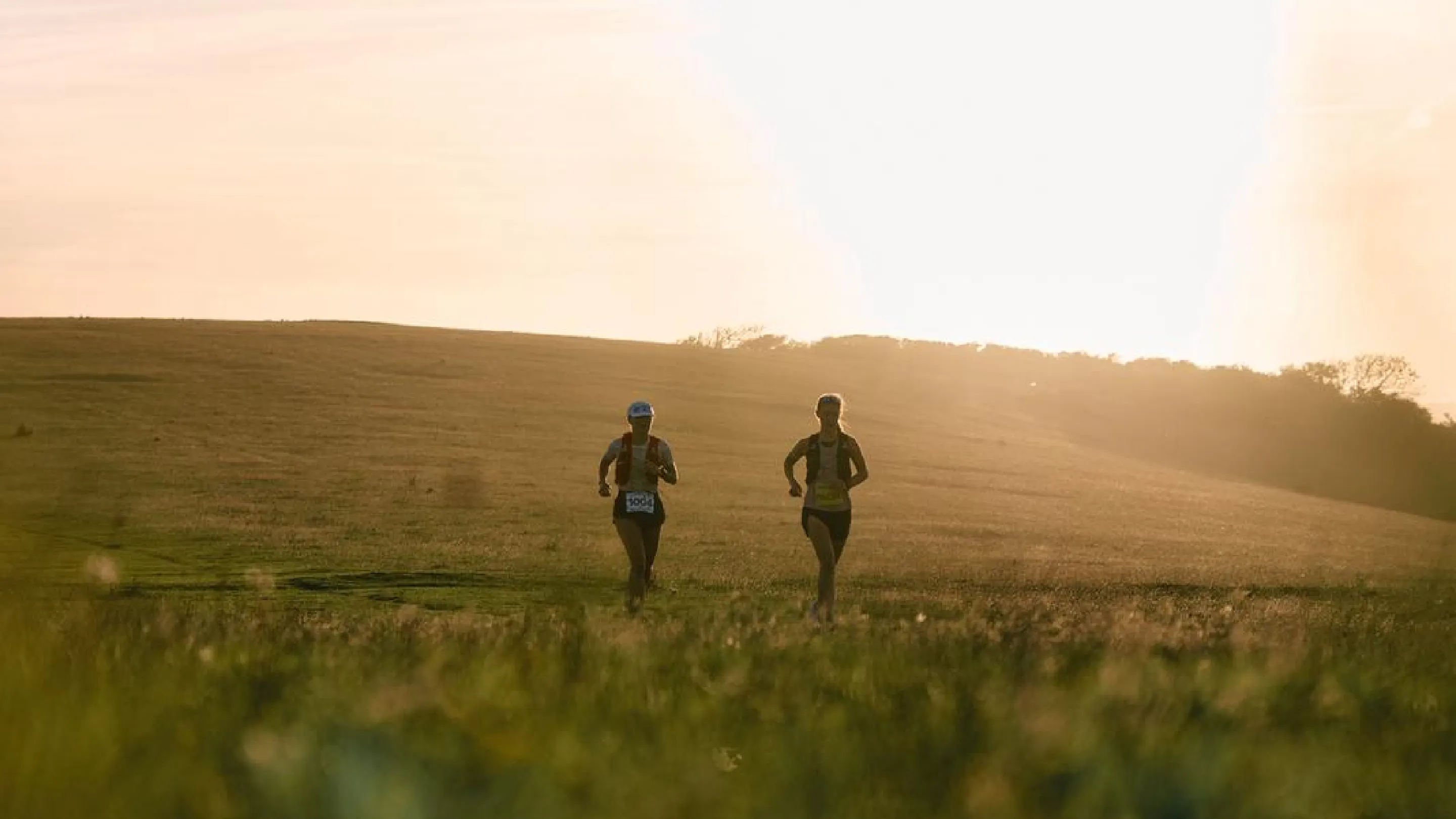
For all the sweeping sunrises and mountain views, ultra running remains an intensely visceral, raw, but beautifully brutal sport. It has a way of stripping back what we consider socially acceptable within just 20 miles.
We’ve all heard the horror stories of black toenails and blistered skin, but how bad do your feet actually get?
"I'll be honest, your feet do get pretty grim," Imo put it bluntly. "I don't know many ultra-runners with nice feet, if any at all. When I ran the length of the UK back in 2022, it was my very first introduction to multi-day movement, and the constant damp meant I actually ended up with mild trench foot."
Then there are the basic human functions that most people outside of the sport may not fully comprehend.
“I’d say the two gross realities people don’t hear about enough are, firstly, going to the toilet,” she says. “You learn to go anywhere and everywhere on the trails, and you quickly develop absolutely no shame for it”
“And secondly, you smell. You just kind of live in your own body odour for the entire duration of the race, embrace it, and keep moving.”
Aid stations become much more than places to refill bottles and grab food.
"I wouldn't necessarily fully wash at an aid station," Imo says, "but I will flannel myself down to get the salt off, or cover myself in ice and water if it's baking hot. I find checkpoints completely game-changing, both physically and mentally. It’s a total reset”
When does it stop being fun?
It’s a question almost all ultra runners eventually have to answer for themselves.
For Imo, the answer is rather simple.
“It stops being fun when you’re in pain or low on energy,” she says. “But if you’re in a beautiful place, and you can take on fuel again… you can turn it back.”
Fun isn’t constant. It comes and goes. But more importantly, it can be recovered. Which might be the most useful insights for anyone stepping into their first long race?
Because “hard” in an ultra is rarely just about tired legs that build over time. More often, “hard” is found in the deep, quiet hours of the early morning when your mind begins to wander into dark places.
“Sometimes a lot goes through your head, sometimes nothing,” Imo says, reflecting on those night sections. “If it’s a lot, then you’re actively battling the demons. If it’s nothing, you’re just working through the motions. Your mindset is your biggest strength in an ultra, but also your biggest weakness when you’re battling with it.”
And in those moments, the response isn’t always technical.
Most training guides talk about electrolytes, pacing, and fuelling strategies. At an elite level, it’s easy to assume every decision is driven by science. But in reality, it can be something much more personal.
Small comforts become anchors.
“The lowest point usually comes when you are lowest on energy,” she explains. “So I try to take in some fuel, and I will put on a song. I tend to have one specific song per race or challenge that I’ve done. I’ll put that on repeat and just lock in — because you know you’ve got a high coming again.”
And sometimes, it’s even simpler than that.
“Having the warmth of a cup of tea when I’m in the dark hole of an ultra is a game-changer.”
For a Yorkshire runner, this is barely a little luxury item in her kit bag. It’s a necessity.
More than just running
Perhaps the biggest surprise is that ultra running isn't quite what most people imagine.
From the outside, it looks relentless. A test of fitness, discipline and suffering over extreme distances.
Spend enough time talking to experienced ultra runners, though, and a different picture emerges. Of course, there are difficult moments, certainly. Wet feet, long nights and occasional tears.
But there are also cups of tea at aid stations, walk breaks and sunrises.
The biggest misconception might be that ultra racing is about running hard from start to finish.
As Imo Boddy puts it, “You don’t necessarily need pacing in an ultra. The way to success, in my opinion, is to go off feel and just make sure you’re never pushing too hard, particularly in the longer efforts.”
The beauty of ultras, she says, “is it’s just an amazing day out on the trail”.
Imo's South Downs 100 Essential Kit
Interested in the latest shoes, apparel and technology? Then head over to our Kit & Gear category for more reviews, tips, advice and product releases.
Welcome
Welcome to SportsShoes Kit & Gear Hub! Here you'll find all the information and advice you need about the very latest kit, technology and gear.
Read More
Share this
Featured Articles
View All