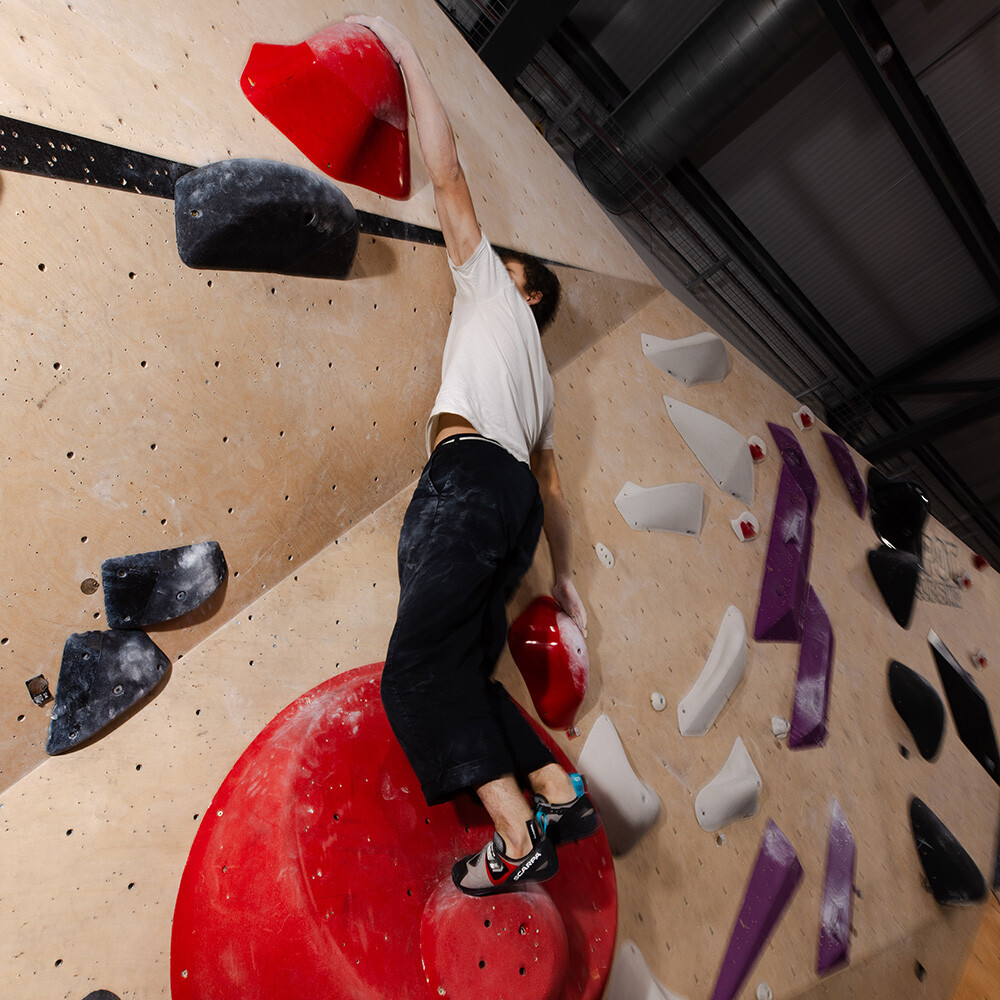
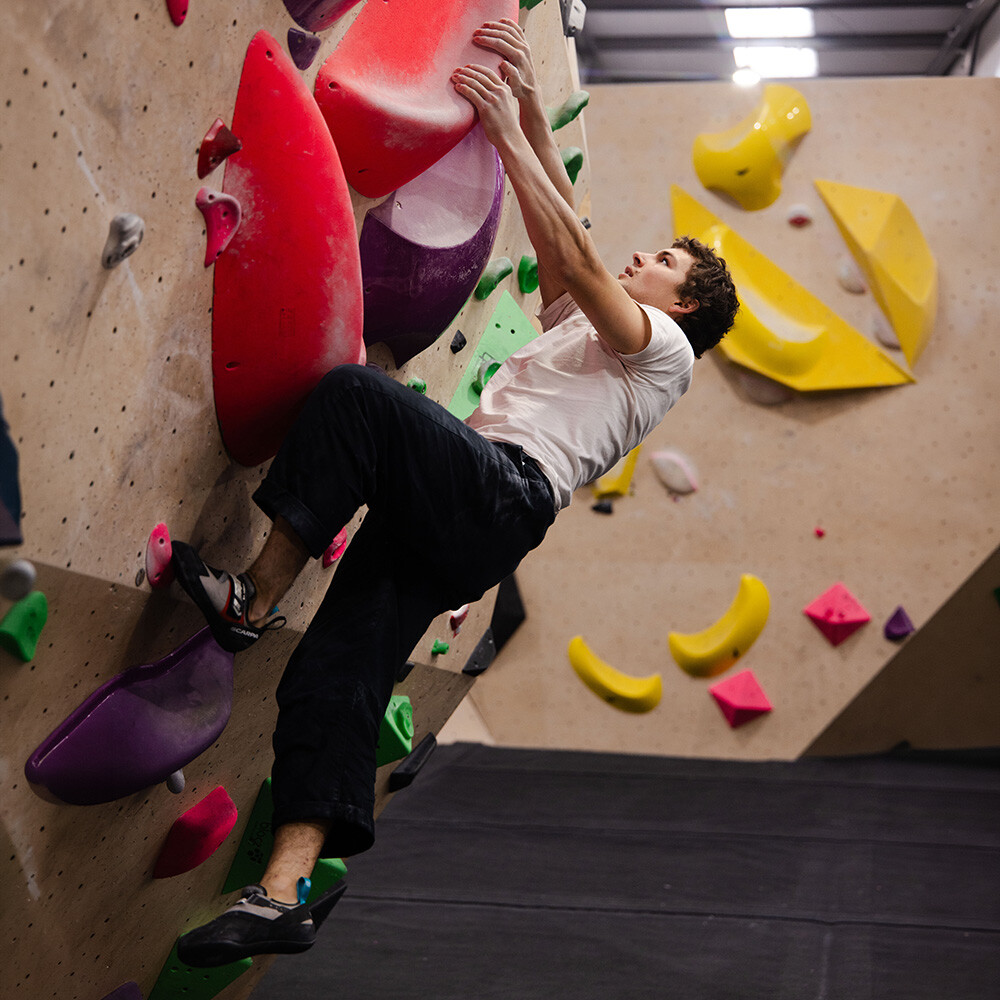
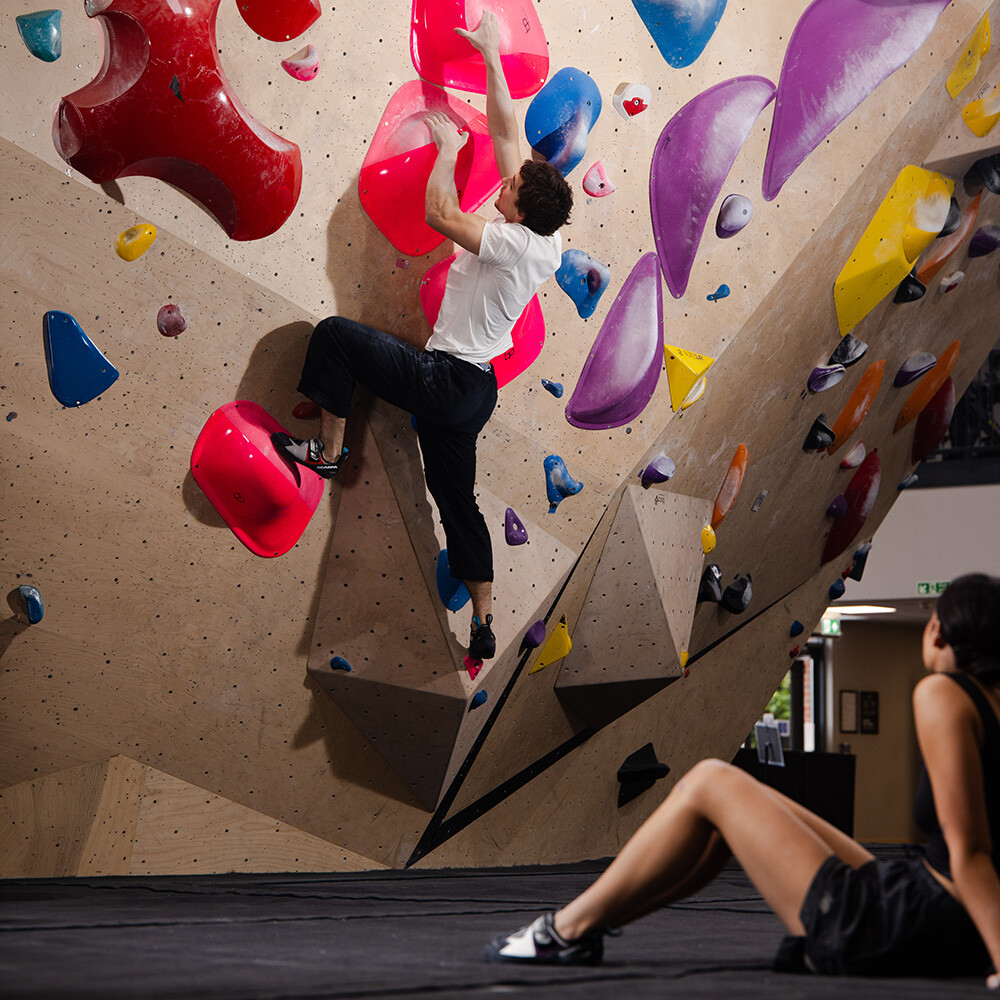
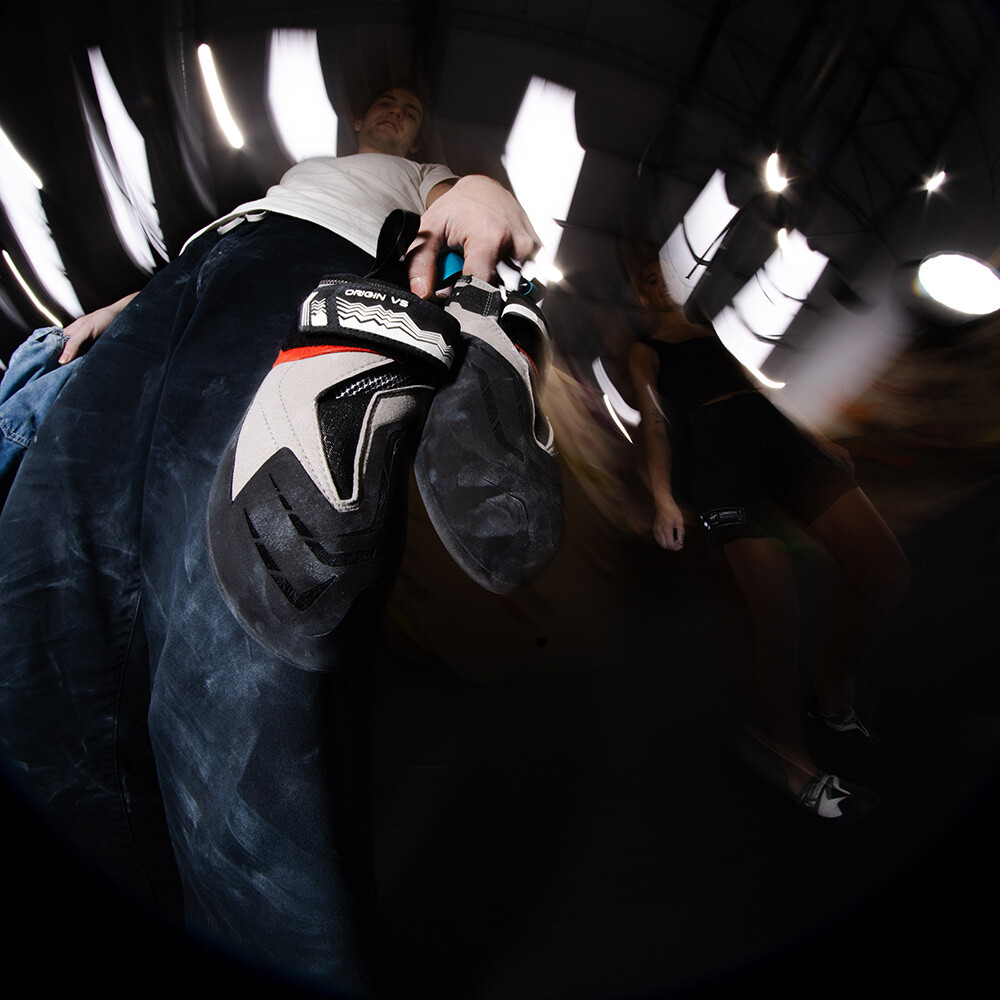
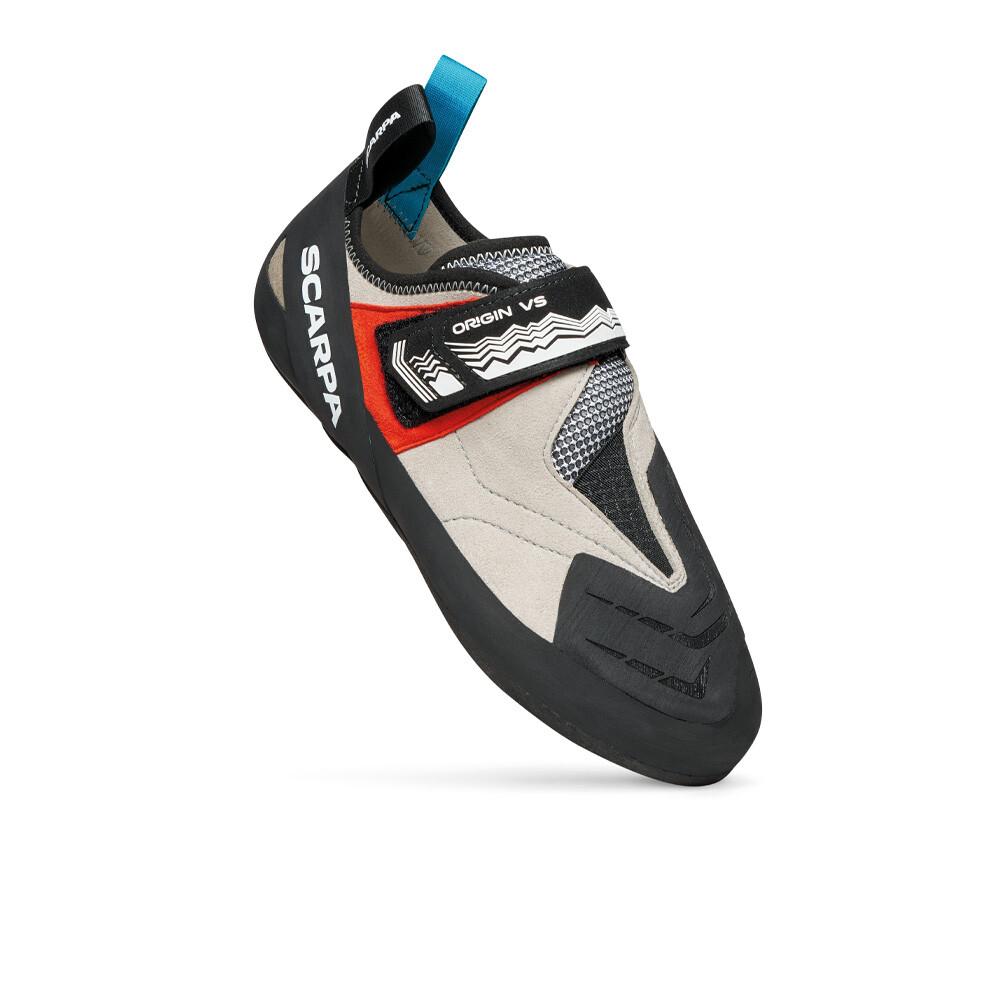
Scarpa Origin VS Men's Climbing Shoes
The first incarnation of Scarpa's Origin VS was a new standard-setter: a competitively priced shoe that combined the comfort of an entry-level model with the performance and materials of high-end designs. This latest iteration doubles down on that ethos, delivering a truly remarkable climbing shoe- levelling up on all fronts.
Dual-Ply Microfibre Upper
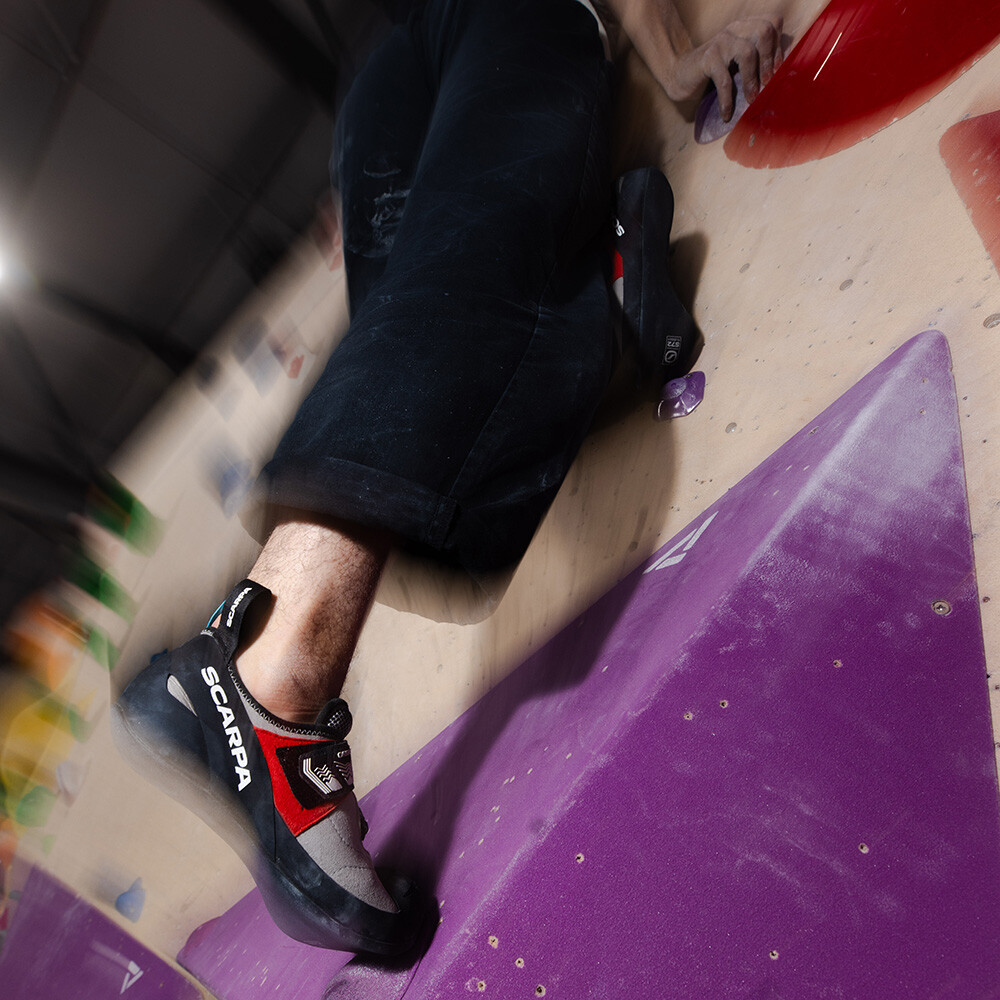
The upper is crafted from a soft but durable microfibre to swathe feet in comfort. It offers controlled stretch, allowing your feet to flex as you climb, whilst still providing support. The toe box is slightly wider than its predecessor, allowing for greater comfort and providing more space for toe splay. The two loops at the heel assist with putting the shoes on and taking them off, and a high-stretch gusset makes for ease of entry, and the competition-style Velcro strap locks in the fit for confident moves.
S72 Rubber Outsole
The outsole is made using S72 rubber - arguably the stickiest compound on the market - and an M50 toe patch, the same upper rubber used in SCARPA's high-performance models, for unrivalled grip. The toe patch has been refined to be more supple and stretchy, delivering out-of-the-box comfort and elevated performance levels. This combination of grip and flex helps you fly up walls distraction-free, adhering to fine textures with ease. S72 is a high friction rubber, developed and tested by SCARPA. This soft compound gives a Shore A rating of 72, making it very adaptable to any surface and providing an excellent mechanical keying effect. S72 works equally well on rock and on indoor walls. Atop this, a piece of Flexan reinforces the shoe. The outsole also features PAF, an innovative heel system that helps both spread the force of the heel tension (reducing over-compression of the toe box) and improves the fit of the heel. The aggressive tension-rubber is interrupted behind the heel to reduce pressure on the Achilles tendon and connected with softer rubber, that works like a bridge and allows full adaption to the shape of the heel. The holes on the side of the heel indicate the tension applied, which varies between 1 hole for light tension, 2 holes for mid tension and 3 holes for strong tension.