Your first Marathon: Tips & Preparation for Beginners
Elisabeth Grund is a passionate marathon runner who has already completed 31 marathons. Her experience ranges from major city marathons to challenging long-distance races across Europe. In this article, she shares her top tips for beginners who are planning their first marathon.
ㅤ
The first marathon is a huge goal for many runners. 26.2 miles is a distance that commands respect, inspires dreams and can sometimes be a little daunting.
It's especially important that your first marathon is beginner-friendly and that you take to the start with good preparation and the right race strategy.
Your first experience can be formative—in the best case, motivating you for many more running adventures.
In this article I’ll share my most important tips for beginners who are planning their first marathon and show which marathons in Europe are especially suitable for newbies.
ㅤ
Jump to: What makes a marathon suitable for beginners? | Which marathons in Europe are best for beginners? | Tips for your first marathon | Common mistakes in your first marathon | The best marathon shoes for beginners | Why your first marathon is formative | FAQ |
ㅤ
What makes a marathon suitable for beginners?
A good marathon for beginners should avoid as much unnecessary extra strain as possible. For me, there are a few clear criteria that make a marathon beginner-friendly.
ㅤ
1. An as-flat-as-possible course
Especially for your first marathon, it’s important to avoid additional strain.
A flat course with a comfortable surface is worth its weight in gold. Minimal cobblestones, no extreme elevation gains, no technical sections—as a beginner you’ll have your hands full with the distance alone.
Every extra challenge costs energy, which you’ll desperately need in the last kilometres.
ㅤ
2. The right number of participants
The size of the event also plays a part. Very large starting fields can lead you to start off too fast.
Very small events, in contrast, can be mentally tough, because you won’t have anyone to “cling on to.” A moderate number of participants is ideal when running a marathon.
Often, the sweet spot is around 8,000 to 25,000 starters—large enough for buzz and a great atmosphere, but without overwhelming crowds.
ㅤ
3. Good atmosphere along the course
For your first marathon, the support of the crowd can make a real difference. Getting cheered along the way carries you through the hard moments, when you feel like giving up.
Luckily, many city marathons have a fantastic atmosphere with music, happy people and positivity all round. This really helps, especially when things get tough later on.
ㅤ
4. The sightseeing factor
A so-called “sightseeing marathon” can be perfect for your first time. A city you’ve always wanted to see is extra motivating—landmarks, beautiful views, perhaps even the sea or mountains.
These impressions distract you and give a mental boost. You’re not just collecting kilometres, but memories too!
ㅤ
ㅤ
Which marathons in Europe are best for beginners?
| Frankfurt Marathon (Germany) | Bremen Marathon (Germany) | Hamburg Marathon (Germany) | Prague Marathon (Czech Republic) | |
| Course profile | Very flat | Very flat | Flat | Flat, but with bridges and cobblestones |
| Elevation | 28 m | 42 m | 140 m | 75 m |
| Number of participants | 17,000 | 11,000 | 11,200 | 7,600 |
| Avg. race temperature | 10-15 °C | 15-20 °C | 10-15 °C | 15 °C |
| Beginner friendliness | 5/5 | 5/5 | 4/5 | 3/5 |
*All marathons in this overview were run and reviewed by Elli herself.
ㅤ
1. Frankfurt Marathon (Germany)
Beginner friendliness: 5/5
ㅤ
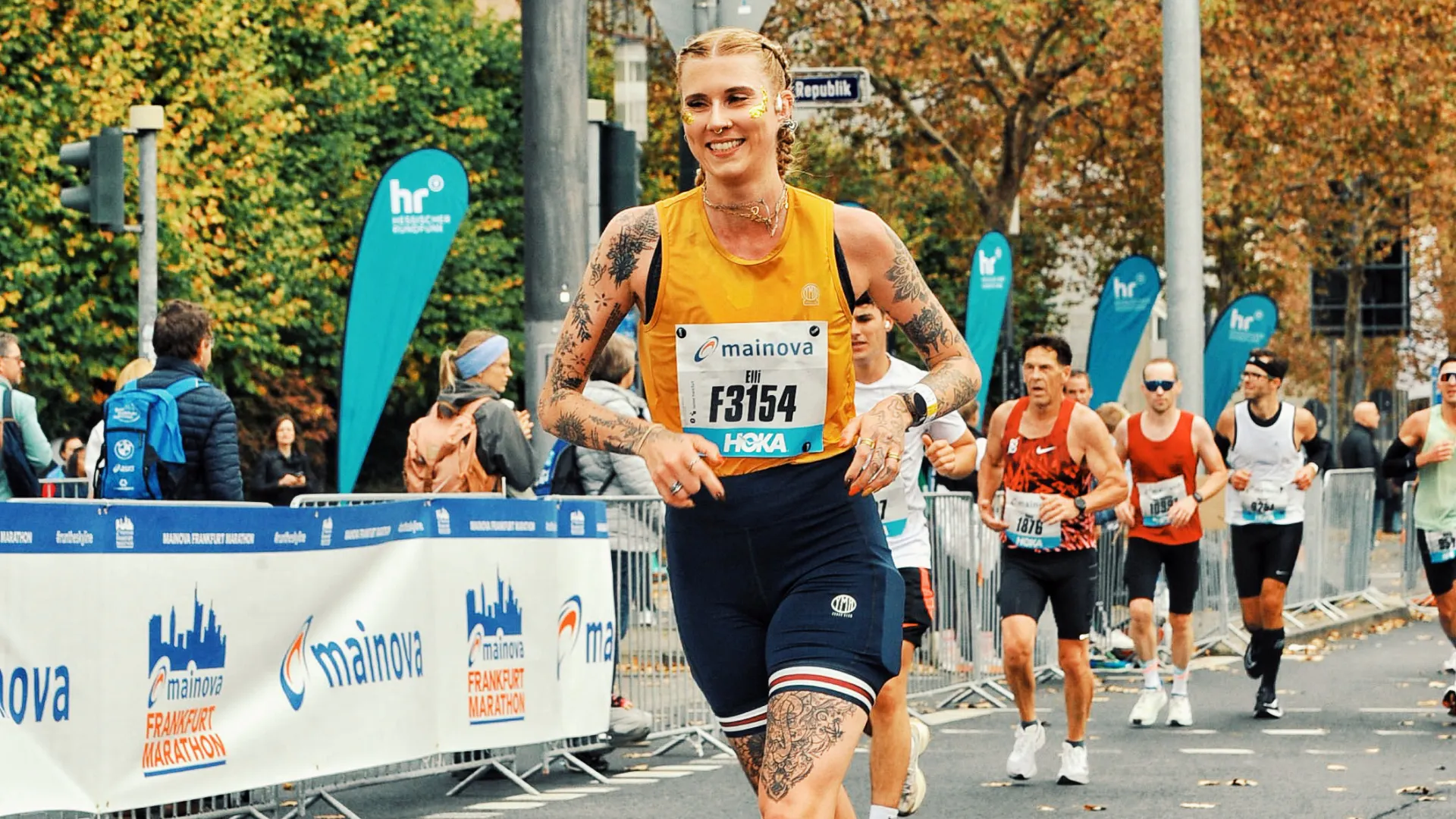
The Frankfurt Marathon is my absolute favourite—everything is just right here.
The course is extremely flat, with only about 28 metres of elevation, making it perfect for beginners. You can stick to your pace without constantly having to battle hills. With around 17,000 participants, the field is large enough for a fantastic atmosphere, but not overwhelming.
Temperatures in October are usually between 10 and 15 degrees—almost ideal for a marathon.
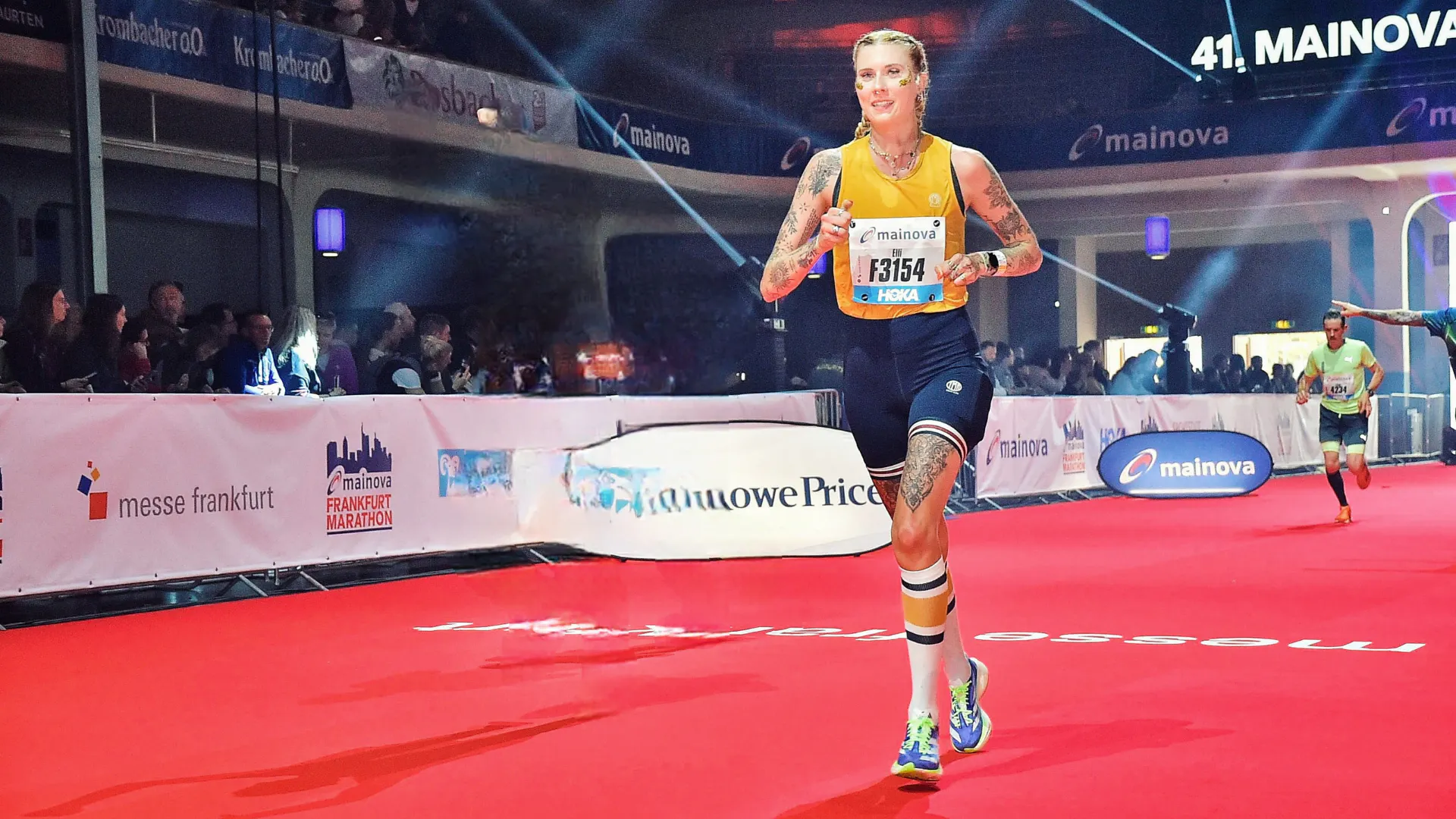
The absolute highlight is the finish in the Festhalle. The atmosphere, the lights, the crowd—pure goosebumps. For me, this marathon fully deserves 5 out of 5 for beginner friendliness.
ㅤ
Advantages for beginners:
● Very flat course
● Comfortably cool temperatures
● Great crowd support
● Excellent organisation
● Emotional finish line experience
ㅤ
2. Bremen Marathon (Germany)
Beginner friendliness: 5/5
ㅤ
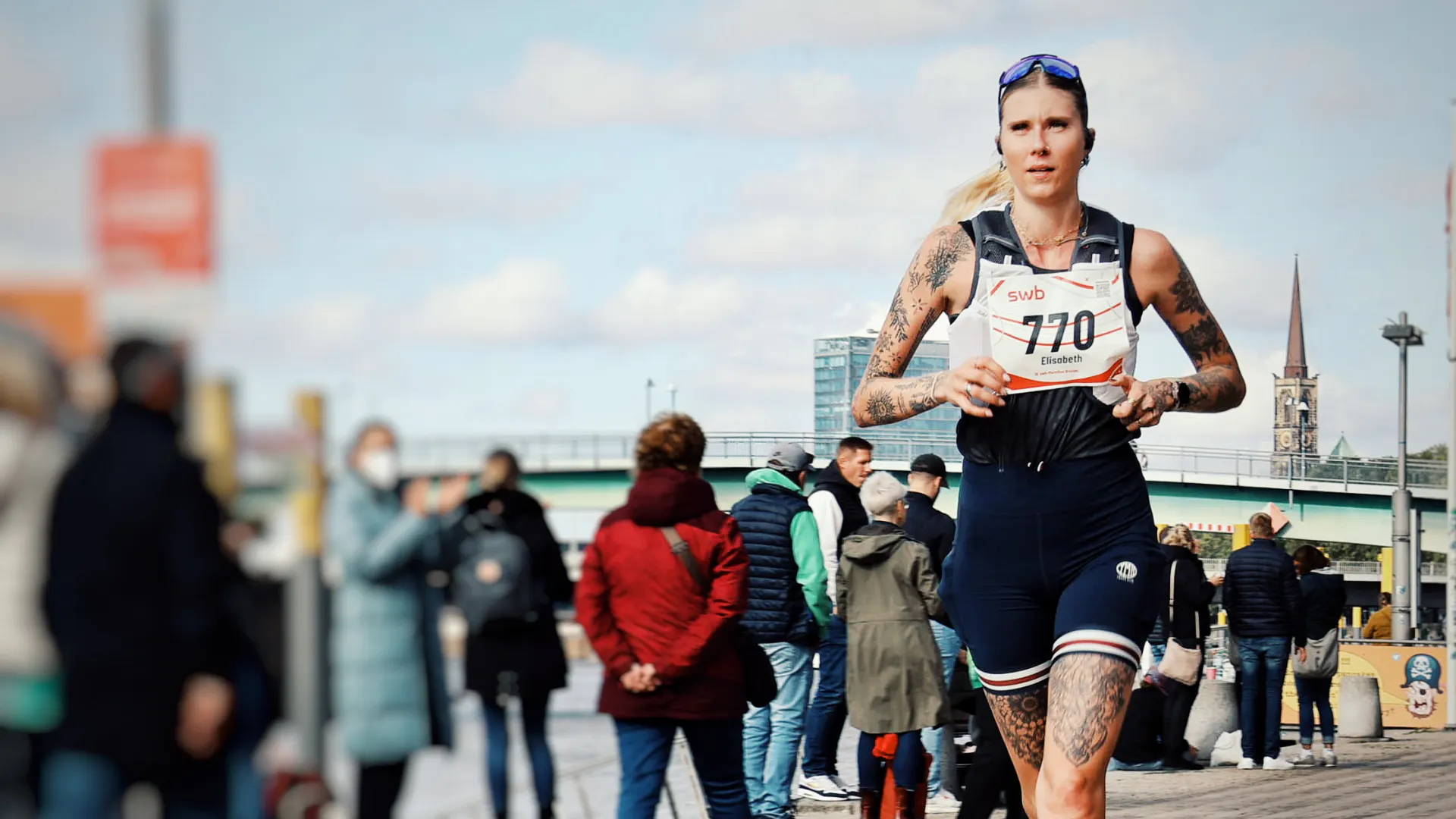
The Bremen Marathon was a real surprise for me.
With only 42 metres of elevation, this course is also very flat and easy to manage.
About 11,000 participants create a pleasant buzz. I’m especially fond of the varied course—there’s plenty to see, which really helps you mentally, especially on your first marathon.
Temperatures of 15–20 degrees are a bit warmer but still manageable for most runners.
All in all, the Bremen Marathon is very beginner-friendly and scores 5/5 on my scale.
ㅤ
Advantages for beginners:
● Flat course
● Comfortable event size
● Varied route
● Good mental support from varied scenery
ㅤ
3. Hamburg Marathon (Germany)
Beginner friendliness: 4/5
ㅤ
The Hamburg Marathon impresses with its unique atmosphere—the crowd really carries you through the race. The course takes you along the Reeperbahn, which makes for some memorable moments.
With roughly 140 metres of elevation, it’s not quite as flat as Frankfurt or Bremen, but still very doable for beginners. 10–15 degrees on race day is also pleasant.
Overall, the Hamburg Marathon is a bit more demanding than Frankfurt or Bremen, so I’d give it 4 points for beginner friendliness.
ㅤ
Advantages for beginners:
● Large crowd support
● Motivating atmosphere
● Good organisation
● Flat to gently undulating course
ㅤ
4. Prague Marathon (Czech Republic)
Beginner friendliness: 3/5
ㅤ
Prague is a stunning city, both scenically and culturally. The course is basically flat with about 75 metres of elevation, but there are a few bridges and cobblestone sections.
The run through the old city is beautiful, but do keep in mind that the surface and bridges can cost you energy. That’s what makes the race more challenging—especially if you’re not used to these kinds of surfaces.
With around 7,600 participants, the field is compact, which I personally find very pleasant.
All in all, I’d rate the Prague Marathon with 3 out of 5 for beginner friendliness—it’s moderately suitable.
ㅤ
Advantages for beginners:
● Gorgeous sightseeing route
● Good organisation
● Manageable number of participants
● Motivating backdrop
ㅤ
ㅤ
Tips for your first marathon
ㅤ
1. Use the ABC goal strategy
My favourite mental strategy for a marathon is called ABC goal setting.
ㅤ
Goal A: Your big dream goal—perhaps a target time or even a new PB.
Goal B: A realistic, more defensive goal.
Goal C: Simply to finish.
ㅤ
The big plus of this strategy is that you always achieve a goal—no matter how the race goes. If you notice that goal A isn’t on the cards, you can switch your mindset. That takes the pressure off and helps you stay mentally strong.
I especially recommend beginners to set their goals low on purpose. Your first marathon is no place for overblown expectations. It’s about finishing—and experiencing it.
ㅤ
2. Run the first half deliberately slower
ㅤ
It’s easy to underestimate just how demanding the last 12–15km can be. The marathon doesn’t start at kilometre 1, but often only kicks in from kilometre 30. Especially for beginners: better to start a bit too slowly than too quickly.
If you still feel fresh at kilometre 21, you’ve done everything right. Patience is your greatest asset here.
ㅤ
3. Long runs are key in your training
ㅤ
In marathon training, long, slow runs are absolutely essential. Your body needs to learn to work for long periods under strain. These sessions are as much mental training as physical.
ㅤ
4. Don’t underestimate strength training
ㅤ
Many beginners focus only on running when preparing for a marathon.
But strength training helps stabilise your running form, makes you more efficient, and prevents injuries.
Especially over the marathon distance, this really pays off.
ㅤ
5. Test your nutrition and fuelling
To be honest, my first marathon wasn’t a great experience—not because of the course or distance, but because I had severe stomach pain. I learned back then: nutrition is not a side issue.
In your preparation, it’s important to eat enough and eat mindfully.
Carb loading should be sensible and not overdone.
And above all: never try anything new on race day.
These days, I fuel every 5–7 km with my tried-and-tested energy gels. Especially in the last few kilometres, I feel how much energy that gives me.
ㅤ
ㅤ
Common mistakes in your first marathon
Many mistakes in your first marathon arise not from a lack of fitness, but from poor pacing or bad preparation.
● Setting off too quickly
● Not enough fuelling
● New running shoes on race day
● Not enough recovery during training
● Unrealistic target times
ㅤ
The best marathon shoes for beginners
The right running shoe can make a huge difference in your first marathon.
Especially for beginners, I recommend a shoe that:
● Offers plenty of cushioning
● Stays comfortable on long runs
● Remains stable when your legs get tired
● Feels good in both training and on race day
ㅤ
ㅤ
Why your first marathon is formative
A positive first marathon experience can shape your whole running journey. It gives you self-confidence and shows you that you can often do more than you think.
My first marathon was tough due to my stomach issues, but I finished. No one can take that sense of achievement away from you.
But I also know exactly how quickly negative experiences can put people off. If too many things go wrong at once—a poor pace, bad fuelling, or an unsuitable course—it can be truly demotivating. That’s why it’s so important to give yourself a supportive environment within your control for your first marathon, instead of creating extra challenges.
ㅤ
ㅤ
After you’ve completed your first marathon, you can look for something more extraordinary.
Then, you can take on special events: a crystal marathon underground, a more demanding marathon with elevation like Palma, or a race somewhere you’ve always dreamed of visiting.
But my most important advice remains:
Experience your first marathon deliberately and with patience, rather than trying to do too much, too quickly.
The marathon journey isn’t a sprint. It’s a path—and, as with every long journey, the first step often decides whether we want to keep going.
ㅤ
Want to know more about Elisabeth Grund? Follow her on Instagram to stay updated with her latest running adventures.
ㅤ
ㅤ
FAQs
ㅤ
Want to find out more? We've been busy collecting all the latest tips & expert advice for marathon training and race days. Our Marathon category lets you experience real in-the-moment stories as we dive deeper into Q&A with athletes, kit reviews, nutritional advice and so much more!
Welcome
We've been busy collecting all the latest tips & expert advice for marathon training and race days. Our exclusive guide lets you experience real in-the-moment stories as we dive deeper into Q&A with top brands, exclusive SportsShoes reviews, nutrition advice and so much more!