INSPIRATION: London Marathon 2026: world records & elite athlete insights.
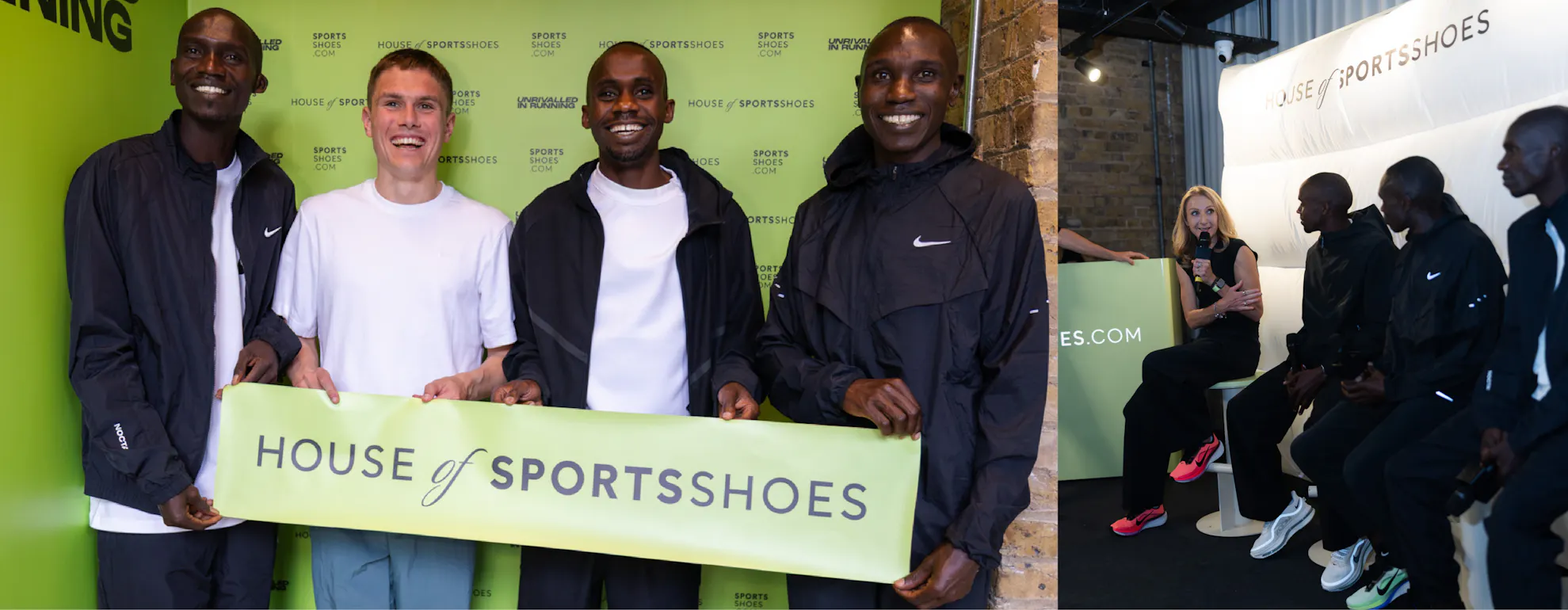
The day after a record-breaking London Marathon, running legends Paula Radcliffe and Steve Cram joined us at the House of SportsShoes to reflect on one of the most significant editions of this event, alongside a stellar line-up of Nike marathon athletes who had shaped the field this year.
With a record-breaking 59,750 finishers and multiple historic performances, 2026 delivered a defining moment in the evolution of elite marathon running and London Marathon history.
A record-breaking London Marathon: depth, pace and world-class performances
Paula Radcliffe and Steve Cram highlighted the scale of this year's event, with 59,750 finishers surpassing the previous global record set at the New York Marathon last November.
At the front of the women’s race, we saw Ethiopia’s Tigst Assefa set a new women-only world record of 2:15:41. Tigst went out hard and fast, with tactical moves unfolding all the way to the finish between herself and Helen Obiri and Joyciline Jepkosgei, making the performance even more impressive, with surges that shaped a high-pressure final phase.
In the men’s race, the quality of the field delivered one of the deepest contests in marathon history. Sebastian Sawe, Jacob Kiplimo and debutant Yomif Kejelcha, which added an unexpected element to the race. They formed part of a leading group, which, by contrast, started more steadily, with the leaders going through halfway in 60:29.
That set the stage for a dramatic second half, culminating in Sawe’s breakthrough world record of 1:59:30, and Kejelacha’s second place of 1:59:41, two athletes breaking the iconic two-hour barrier and the top three finishing inside the previous world record.

Men’s race breakdown: pacing strategy and breakthrough performances
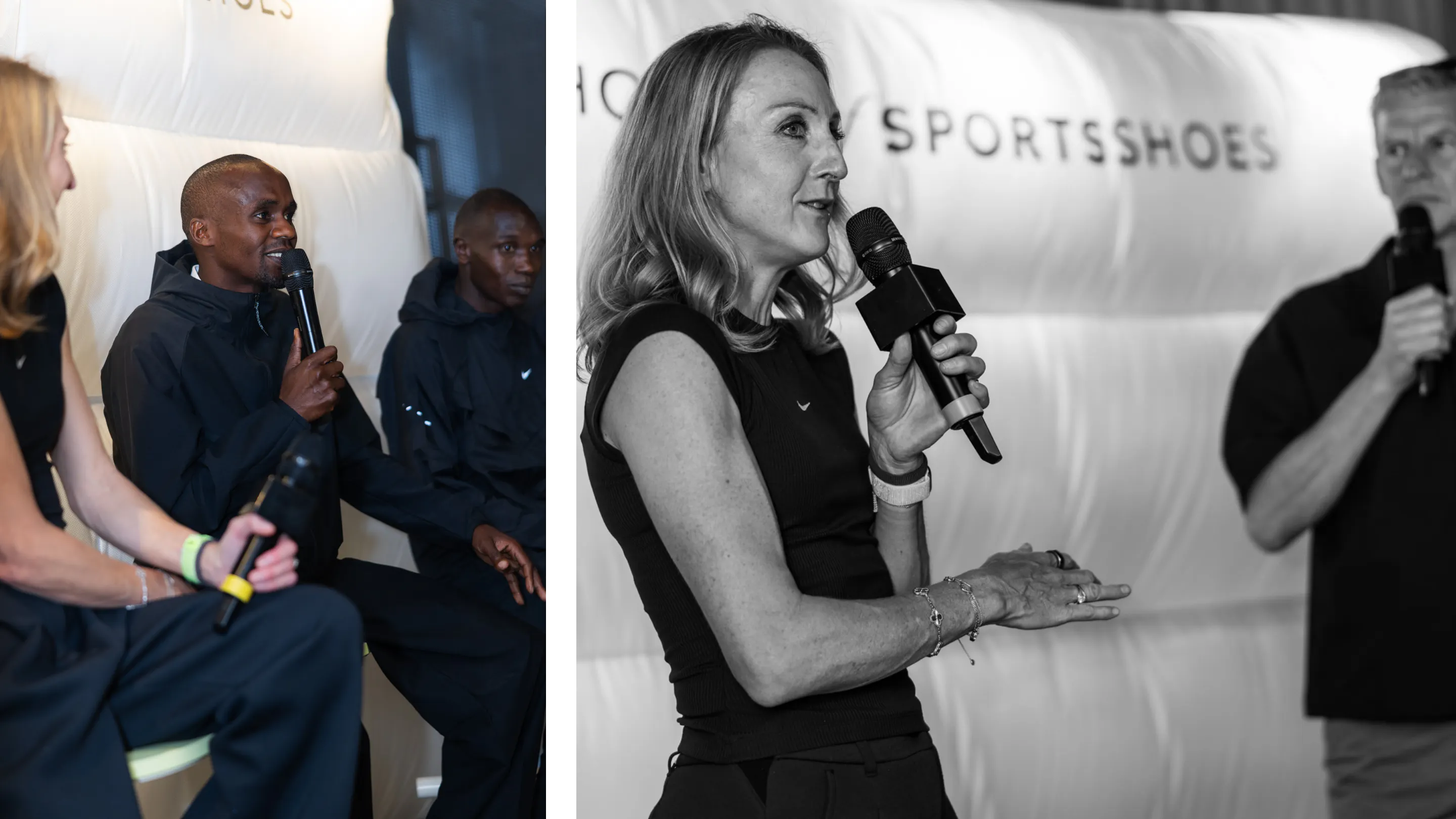
Paula and Steve reflected with Jacob Kiplimo, third-place finisher, also known for breaking the previous marathon world record and is the current half-marathon world record holder and cross-country champion. As well as Nike athlete Geoffrey Kamworor, who finished eighth in the marathon while returning from injury. and Joshua Cheptegei, the world record holder over 5,000m and 10,000m
Kiplimo admitted he was surprised to see all three runners inside the previous world-record time. As he came down the home straight and saw the clock, he knew he had to push all the way to the line. With only three marathons under his belt, he acknowledged that there was still so much he was learning from the demands of the distance.
Cheptegei focused on the challenges of transitioning from track distances (5,000m and 10,000m) to the marathon, particularly around nutrition and hydration strategy, which require further adaptation for the 26.2 miles. He also noted how rapidly marathon performance standards are advancing, referring to Eliud Kipchoge’s famous phrase “no human is limited”. Where breaking the two-hour barrier once seemed impossible, London demonstrated how quickly the sports is refining what athletes believe is achievable. Cheptegei said he believes the top athletes will continue to run even faster than they did in London.
Jake Smith: pacing execution, resilience and long-term progression
We were joined at HOSS by British athlete Jake Smith, who was among those racing towards the front of the field, passing the halfway mark in approximately 63 minutes with the leading British group.
Jake set off with intent but admitted that the final four miles were a struggle, and that the pace guidance he had been relying on from his talking watch began to fade. During a lighter moment on stage, he joked that by the final miles, he wanted to throw his ‘talking’ watch away, as it continued to feed him pace and heart rate updates.
Smith also reflected on his journey to elite competition, noting that just three years ago, he was on crutches while recovering from RED-S. So, despite the difficulty in the closing stages of the marathon, he viewed the performance positively, even though he wanted more.
“Every marathon teaches you something,” Steve Cram stated during the discussion, highlighting how elite marathon development is rarely linear, with setbacks, injuries all forming part of the journey.
Looking ahead, he can see more major marathons on the horizon, alongside some local races for fun, describing marathon running as part of a longer journey that will inevitably include both setbacks and breakthroughs.
Paula Radcliffe: world records, pacing theory and the “safety line”
Steve Cram reflected on Paula Radcliffe’s 2003 marathon world record of 2:15:25, where she averaged around 5:09 per mile (3:12-minute kilometres) - or quicker in some miles- in a performance that redefined women’s distance running. He wanted to know what was going through her mind in this race and how the plan came together.
Radcliffe explained that marathon success is highly individual and must be built on what works in training. For her, the guiding principle was simple: run faster than she ever had before. She introduced the concept of the marathon ‘safety line’ - the point at which an athlete maximises performance without tipping into breakdown. According to Radcliffe, the best marathon runners get as close to that line as possible without exceeding it. That is the trap - and the beauty - of the marathon.
“The marathon is built on risk and trust,” Radcliffe explained — trusting your training, pacing strategy and ability to sustain discomfort for as long as possible. That balance between controlled aggression and overreaching remains one of the defining tactical challenges in elite marathon racing.
See emphasised that incremental gains are essential. Similarly, she explained that if Jacob Kiplimo continues trying to run faster than he has before, he will edge closer to that world record.
The future of marathon running: faster, deeper, more tactical
The collective insights from athletes and experts pointed to a clear trend: marathon performance is evolving at an unprecedented pace.
With multiple athletes finishing inside previous world record times and new barriers being challenged, the sport is entering a phase defined by:
More aggressive yet controlled pacing strategies
Deeper elite fields across both men’s and women’s races
Rapid improvements in endurance preparation and race execution
Increased emphasis on nutrition, hydration and marginal gains
As Radcliffe and the panel discussed, the next breakthroughs may not come from isolated performances, but from continuous improvements across the entire elite field.
The 2026 London Marathon may be remembered not just for its records but for how clearly it demonstrated where the sport is heading next.
Welcome
Welcome to the SportsShoes Trail Hub! We’ve teamed up with the experts to bring you the very best advice in all things running - from training, to nutrition and even motivation. Alongside tips from you, our running community, and the latest news and releases, we hope we’ll inspire you to run stronger,better and happier – because as we know, it’s no fun standing still.